


Table of contents
- Recognizing sensitive skin: symptoms and causes
- Strengthening the skin barrier: the key to calm skin
- The right cleansing routine for sensitive skin
- Ingredients for sensitive skin: these active ingredients soothe
- Reducing redness: moisture, protection, and care
- Skincare for sensitive skin: tips for everyday life
- Conclusion: your personal skincare routine for sensitive skin
- Frequently asked questions
Last updated: 13 September 2026
Recognizing sensitive skin: symptoms and causes
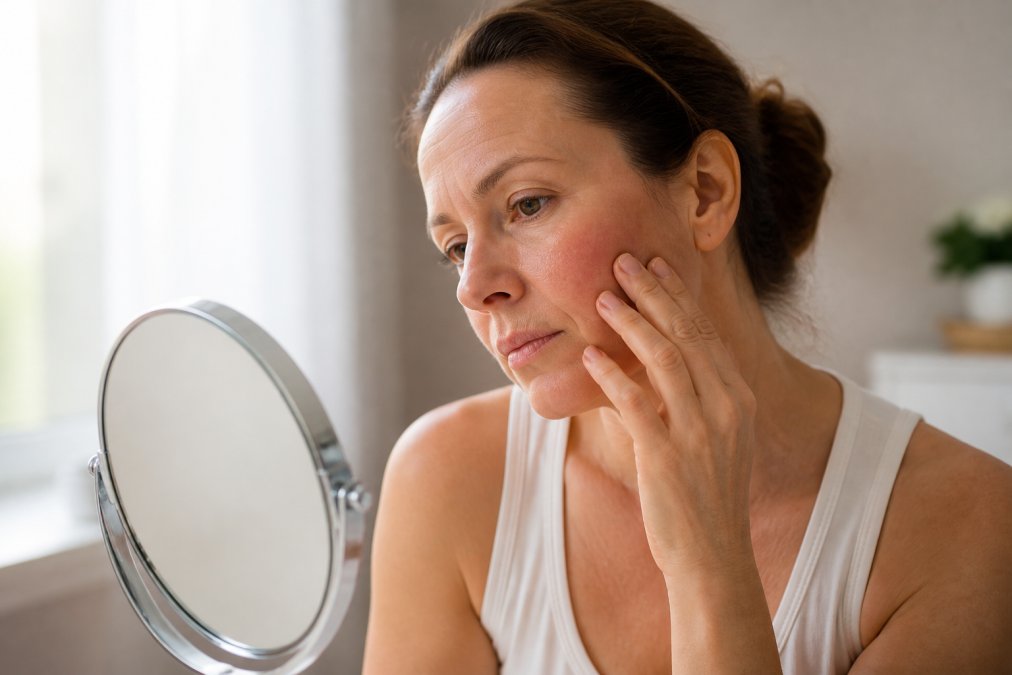
If you have sensitive skin, you usually notice it quickly: after cleansing, your face feels tight, new creams cause redness, and even water can sting. Sensitive skin is a skin condition in which the skin barrier is weakened, causing the skin to react more quickly to external stimuli such as changes in temperature, fragrance ingredients, or stress. This heightened reactivity is not imagined, but a measurable interaction of a disrupted skin barrier, increased moisture loss, and an overly sensitive response to stimuli.
The causes are rarely clear-cut. Often several factors work together:
- Genetic predisposition: A thinner skin type with fewer lipids generally reacts more quickly to stimuli.
- Too much skincare: Exfoliating too often, harsh cleansers, and changing active ingredient combinations damage the protective layer.
- Environmental influences: Cold, dry indoor heating air, UV radiation, and fine dust put strain on the skin barrier.
- Hormonal fluctuations: During phases of hormonal change, skin often changes noticeably and becomes more reactive.
Typical symptoms include redness on the cheeks and nose, a feeling of tightness, itching, dryness, and a burning sensation after applying products. If you recognize these signs, you should simplify your routine rather than expand it. This is exactly where the right skincare for sensitive skin comes in.
Strengthening the skin barrier: the key to calm skin
The skin barrier is the outermost protective layer of the skin, made up of lipids and ceramides, and it regulates moisture loss and the penetration of irritants. If it is intact, the skin stays calm. If it is weakened, moisture escapes and irritants get in more easily.
To strengthen the skin barrier, follow a simple sequence: cleanse gently, add moisture, build up the protective layer. Ceramides and lipids fill gaps in the barrier, while glycerin and hyaluronic acid bind water in the upper layers of skin. It is best to avoid fragrances and harsh preservatives completely, as they are among the most common triggers of irritation.
A common mistake is wanting fast results: if you reach for exfoliants or strong actives when skin is red, you prolong the irritated phase. The barrier needs less, not more. As the American Academy of Dermatology emphasizes for sensitive skin, the most important step for reactive skin is a reduced, consistently gentle care routine, not a larger product selection.
The right cleansing routine for sensitive skin
Cleansing often determines whether the skin stays calm all day. If you use hot water and foaming cleansers morning and evening, you add further irritation to the skin barrier.
Here is how to proceed:
- Use lukewarm water, never hot, because heat strips lipids from the skin.
- Use a soap-free cleansing foam with a pH-balanced formula, such as the hyaluron⁵ gentle clean face wash, which cleanses with hyaluronic acid and binds moisture.
- Massage gently with your fingertips, without rubbing or scrubbing.
- Pat dry instead of rubbing to avoid mechanical irritation.
- Use facial toner only if it soothes: an alcohol-free, fragrance-free toner like the basiccare calming tonic with allantoin and panthenol prepares the skin for skincare without drying it out.
Avoid scrubs with coarse particles and cleansing brushes as long as the skin is irritated. Thorough but gentle cleansing is enough to remove makeup and environmental residue.


Ingredients for sensitive skin: these active ingredients soothe
When it comes to ingredients for sensitive skin, the selection matters more than the quantity. Good formulations combine soothing and hydrating ingredients instead of using several strong actives at once. It is also crucial what concentration a substance is in and which other ingredients it is combined with - because the same substance can soothe or irritate depending on dosage and accompanying ingredients.
These active ingredients have proven effective in practice:
- Dexpanthenol (provitamin B5): supports regeneration and soothes irritated skin.
- Niacinamide: can reduce redness and improve skin tolerance.
- Glycerin and hyaluronic acid: bind moisture and reduce the feeling of tightness. Glycerin has strong water-binding properties, while hyaluronic acid covers different molecular sizes and works in both the upper and deeper layers of skin.
- Allantoin: has a soothing effect and supports cell renewal, typically in concentrations of around 0.1 to 0.5 percent.
- Ceramides: replenish the lipid layer of the skin barrier and are often combined with cholesterol and fatty acids, because these building blocks work together in the skin's natural balance.
- Bisabolol and licorice root extract: plant-based soothers that can reduce redness and serve as fragrance substitutes in many sensitive formulations.
A concentrated serum can do a lot here: the skineffect anti-age even skin serum is specially developed for sensitive and inflammation-prone skin and combines soothing care with anti-aging effects.

Dos and don'ts: the quick ingredient checklist
This overview helps you decide in store or online without having to study every INCI list:
| Avoid at all costs | Better suited |
|---|---|
| Fragrances (parfum, limonene, linalool) | fragrance-free formulations |
| Essential oils in high concentration | bisabolol, licorice root extract |
| Alcohol (Alcohol Denat.) near the top of the list | fatty alcohols such as cetyl or stearyl alcohol |
| Fruit acids (AHA, BHA) on irritated skin | lactic acid in low concentration, only when the skin is calm |
| Retinoids during an irritation phase | bakuchiol as a milder alternative |
| Coarse scrubs with particles | enzymatic exfoliants or no exfoliation at all |
| Preservatives such as methylisothiazolinone | phenoxyethanol, sodium benzoate |
Caution is advised with fragrances, essential oils, and alcohol in high concentrations. Fruit acids and retinoids also do not belong in the routine while the skin is still reacting. Introduce new products one at a time and test them for a few days before adding the next one.
Another point many people overlook: the order of ingredients on the packaging can give clues about concentration. If you react sensitively, you should not only avoid irritating substances, but also check where they are listed.
Reducing redness: moisture, protection, and care
You can reduce redness most effectively by giving the skin moisture, strengthening the protective layer, and consistently avoiding irritants. Redness often develops from a combination of moisture loss and widened blood vessel response, which is why a single active ingredient is rarely enough.
Build your routine in this order:
| Care step | Goal | Example active ingredient |
|---|---|---|
| Cleansing | Remove irritants without irritating | soap-free foam, pH-balanced |
| Moisture | Bind water | glycerin, hyaluronic acid |
| Soothing | Reduce redness | dexpanthenol, allantoin, niacinamide |
| Protection | Seal the barrier | ceramides, lipids |
In the evening, an overnight repair treatment is worthwhile: the skineffect perfection night fluid is also suitable for sensitive, stressed skin and supports nighttime cell activity and the skin's own defense system with its anti-stress program.
One point many people underestimate: nutrition and stress also play a role. A balanced diet with enough unsaturated fatty acids and a stable sleep routine support the skin from within. As the German Skin and Allergy Aid explains regarding the skin barrier and care, ongoing stress has a measurable effect on the skin and can intensify redness.
Skincare for sensitive skin: tips for everyday life
If you want to successfully maintain skincare for sensitive skin over time, you do not need a complicated routine, just consistency. Fewer products, a clear order, consistent protection. What most guides leave out: the skin reacts not only to what you apply, but also to what you eat, how you sleep, and how much stress you carry.
Nutrition and skin health
The skin barrier is built from within as well. Certain nutrients can support the lipid layer and reduce inflammatory processes:
- Omega-3 fatty acids from fatty fish, flaxseed oil, or walnuts can reduce inflammation and stabilize the barrier.
- Zinc from whole grains, legumes, and nuts supports skin regeneration and wound healing.
- Vitamin C from bell peppers, citrus fruits, and berries is involved in collagen formation and has antioxidant properties.
- Vitamin E from vegetable oils and nuts protects the skin's lipids from oxidative stress.
- Adequate water helps keep the skin hydrated from within.
A common trigger for redness and itching, on the other hand, is too much heavily processed food, alcohol, and spicy seasonings. If you are sensitive, you can try avoiding alcohol and very spicy foods for two to three weeks and see whether the skin calms down. It is not a cure-all, but it is a simple self-test with no risk.
Stress and the skin barrier
The connection between stress and skin is well known: ongoing stress can slow the regeneration of the skin barrier and promote inflammatory responses. Many people report that redness and itching can increase during stressful periods.
What helps in everyday life:
- Regular sleep times: The skin regenerates mainly at night; irregular sleep disrupts this process.
- Short breaks during the day: Just five minutes of calm breathing can reduce the feeling of stress.
- Movement in fresh air: Moderate exercise has a balancing effect without irritating the skin.
- Screen breaks: Long periods of staring at screens often lead to unconscious scratching and rubbing of the face.
Hormonal fluctuations
With hormonal fluctuations, such as those caused by the cycle, pregnancy, or menopause, the skin can temporarily become more reactive. In the second half of the cycle, many people tend to have more blemishes and redness; during menopause, oil production decreases and the skin becomes drier and thinner. Adjust your routine then instead of expanding it: more moisture, fewer actives, and use products you already tolerate.
More everyday tips
- Use sunscreen daily: UV radiation irritates sensitive skin and increases redness, even on cloudy days.
- Avoid temperature changes: Switching between warm indoor heating and the cold outside puts stress on the barrier.
- Pay attention to fabric choice: Cotton and soft materials irritate the skin less than rough wool.
- Be patient: Regeneration of the skin barrier often takes several weeks, not days.
Conclusion: your personal skincare routine for sensitive skin
Sensitive skin does not require ten steps, just the right three: cleanse gently, add moisture, protect the barrier. If you consistently reduce irritants and give the skin time to regenerate, it will become noticeably calmer.
That is exactly what the care range from Wellmaxx Swiss is designed for: with the hyaluron⁵ gentle clean face wash for mild cleansing, the basiccare calming tonic to soothe, and the skineffect anti-age even skin serum for daily care of sensitive skin. All products rely on scientifically tested active ingredients and avoid unnecessary irritants. Discover them now and give your skin the calm it needs.
Frequently asked questions
Which ingredients should you avoid with sensitive skin?
With sensitive skin, fragrances, preservatives, alcohol, and harsh surfactants are the most common triggers of irritation. Essential oils and scrubs with coarse particles can also damage the skin barrier. Look for short ingredient lists and products labeled fragrance-free and hypoallergenic. A gentle facial toner without alcohol or fragrance, such as the basiccare calming tonic, is suitable as the final step after cleansing and soothes the skin with allantoin and panthenol.
Can anti-aging products be used on sensitive skin?
Yes, if the formula is tailored to the needs of sensitive skin. Active ingredients such as niacinamide, dexpanthenol, and hyaluronic acid are well tolerated and support regeneration and moisture supply. The skineffect anti-age even skin serum was specially developed for stressed, sensitive, and inflammation-prone skin and can soothe the skin while delivering anti-aging benefits. Always introduce new products one at a time over several days to identify intolerances early.
How do you recognize a damaged skin barrier?
Typical signs are a feeling of tightness, redness, itching, dryness, and a burning sensation after applying skincare products. The skin then reacts more quickly to environmental influences and loses more moisture. A damaged skin barrier needs gentle cleansing, soothing active ingredients, and patience. Ceramides, glycerin, and panthenol provide support. The skineffect perfection night fluid is also suitable for sensitive, stressed skin and supports nighttime regeneration.
How often should you cleanse sensitive skin?
Sensitive skin should be cleansed morning and evening with a mild, soap-free cleanser. Avoid exfoliants and cleansing brushes that irritate the skin further. Use lukewarm water and then gently pat the face dry instead of rubbing. The hyaluron⁵ gentle clean face wash cleans especially gently with hyaluronic acid and leaves the skin feeling hydrated, ideal for the daily skincare routine for sensitive skin.


