


Last updated: November 15, 2026
Quick overview
How can you correctly identify your skin type? Observe your skin without skincare products: the wash-and-wait method over two evenings and one morning, or the quick tissue test, reveals shine, tightness and sebum production. Your skin type stays the same for years, while your skin condition can fluctuate in the short term.
- Your skin type is long-lasting, while your skin condition changes with the weather, sleep and stress.
- The wash-and-wait method is performed on two consecutive evenings and the morning in between.
- For the evening test, wait 60 minutes without cream, serum or makeup before examining your face.
- The tissue test uses a paper tissue to show where your skin produces oil in just a few minutes.
- A single day of testing is not enough; only a consistent pattern provides a reliable indication.
Table of contents
- Why your skin type determines the right skincare
- Skin type versus temporary skin condition: the key difference
- Skin type test step by step: the wash-and-wait method
- Tissue test: how to spot shine and sebum at a glance
- Checklist: characteristics of dry, oily, combination and sensitive skin
- Identifying combination and dry skin: common misconceptions
- Tailoring skincare for sensitive skin and checking your skin type in everyday life
- Common questions
- Frequently asked questions
Why your skin type determines the right skincare
The right skincare starts with knowing your skin type. If you are wondering how to identify it correctly, start by observing how your skin reacts without products.

Your skin type is your skin's underlying nature, such as dry, oily, combination or sensitive. It usually stays the same for years. It is influenced by genetics, age and climate.
Common effects of unsuitable skincare:
- Dry skin is overloaded with overly rich creams yet remains rough.
- Oily skin becomes clogged by rich products.
- Sensitive skin reacts to fragrances and harsh cleansing with redness.
Skin type versus temporary skin condition: the key difference
Many people confuse their skin type with their skin's current condition. Skin type is long-lasting. Skin condition is temporary and depends on factors such as weather, sleep, stress or a new skincare product.
For example, naturally normal skin can look dry and flaky in winter. Oily skin can be temporarily irritated after sunburn. Focusing only on your current skin condition can lead you to choose the wrong skincare.
A useful rule of thumb:
- Skin type: Stays the same over months and years.
- Skin condition: Changes with the seasons, sleep and skincare.
Check your skin on several consecutive days and at different times before drawing conclusions.
Skin type test step by step: the wash-and-wait method
The wash-and-wait method is a standardized self-test that lets you observe how your skin behaves without skincare products. It is important to follow the same procedure over several days; only then can you distinguish your skin type from a temporary skin condition.
Preparation:
- Do not test immediately after using an exfoliant, a mask or a new cream, or after sunbathing. These can affect the result.
- Plan the test for two consecutive evenings and the morning in between.
- Use the same gentle, soap-free cleanser on every test day.
Evening procedure:
- Wash your face with lukewarm water and a gentle, soap-free cleansing foam. Do not rub your skin dry; pat it with a soft towel instead.
- Do not apply cream, serum, toner or makeup.
- Wait 60 minutes without touching your face. During this time, your skin regulates its sebum production without outside influences.
- After 60 minutes, examine your face in a mirror under bright, neutral light, ideally daylight rather than warm artificial light.
- Assess your forehead, nose and chin (T-zone), both cheeks and the eye area separately.
Next morning's procedure:
- Assess your skin as soon as you wake up, before washing. Look for shine, tightness and visible pores.
- Repeat the evening test on the second evening using the same cleanser.
What to look for and what it means:
- Shine on the forehead, nose and chin, with matte cheeks: a typical pattern for combination skin.
- Shine all over the face, including the cheeks: a sign of oily skin.
- No shine, tightness and fine lines on the cheeks: a sign of dry skin.
- Redness, burning or itching after cleansing: a sign of sensitive skin, regardless of how much sebum is produced.
- Balanced-looking skin without tightness or noticeable shine: a sign of normal skin.
Important: A single day of testing is not enough. Stress, lack of sleep, hormonal fluctuations or a new skincare product can affect the result on any given day. Only when the pattern remains consistent over two evenings and one morning is it a reliable indication of your skin type.
The wash-and-wait method shows how your skin behaves without skincare products. It does not replace a dermatological assessment, but it provides a much clearer basis than a quick look in the mirror.
The wash-and-wait method at a glance:
| Step | What to do | Timing |
|---|---|---|
| Preparation | No exfoliants, masks or new creams beforehand | Two evenings and one morning |
| Evening cleansing | Lukewarm water and gentle, soap-free cleansing foam | Once in the evening |
| Evening waiting period | Do not apply cream, serum or makeup | 60 minutes |
| Evening assessment | Use a mirror in daylight and examine the T-zone and cheeks separately | After 60 minutes |
| Morning assessment | Check skin for shine and tightness before washing | Immediately after waking |
| Repeat | Repeat the evening test on the second evening using the same cleanser | Second evening |
Tissue test: how to spot shine and sebum at a glance
The tissue test is faster than the wash-and-wait method. All you need is a paper tissue.
- Press a paper tissue lightly against your forehead, nose, chin and cheeks.
- Hold the tissue up to the light.
- Count the oil spots.
Oil across the tissue suggests oily skin. Oil only from the T-zone suggests combination skin. Very little oil on the tissue suggests dry skin.
The test shows your current sebum production. It does not replace a detailed skin analysis, but it provides a quick initial indication.
Checklist: characteristics of dry, oily, combination and sensitive skin
The following characteristics can help you narrow down your skin type. It is important not to confuse them with a temporary skin condition: irritated or tight skin is not necessarily permanently dry or sensitive. Check whether a characteristic recurs over weeks and months or appears only after certain events.
Dry skin:
- Tightness after washing, especially with hot water
- Fine lines and flaky patches, especially on the cheeks and around the eyes
- A matte complexion that responds quickly to moisturizer
- A frequent feeling that creams "soak in" but tightness remains
Oily skin:
- Shine just a few hours after cleansing, even without skincare products
- Visible pores on the forehead, nose and chin
- A tendency toward blackheads and blemishes
- Makeup slides off throughout the day
Combination skin:
- Shine only on the forehead, nose and chin (T-zone)
- Drier or normal cheeks
- Different reactions to the same cream depending on the area of the face
Sensitive skin:
- Redness, burning or itching when using new products
- Quick reactions to fragrances, alcohol or harsh surfactants
- Skin that takes longer to calm down after cleansing or sun exposure
Normal skin:
- Balanced-looking skin without noticeable tightness or strong shine
- Rare irritation and evenly sized pores
Skin barrier and overuse of skincare: an often overlooked issue
A damaged skin barrier can mimic dry, oily or sensitive skin. Frequent cleansing with harsh surfactants, applying several active ingredients at once or exfoliating too often can irritate the barrier. The skin responds with tightness, redness or increased sebum production and may then be mistakenly classified as permanently dry or oily.
A typical pattern: after a period of using many products, skin feels tight and irritated. Switching to rich skincare at this point can overload it further. A more helpful approach is to reduce your routine to a gentle cleanser, moisturizer and sunscreen for a few weeks, then observe your skin again.
How to use the checklist correctly:
- For one week, note which characteristics apply each day.
- Separate ongoing observations from one-off reactions, such as those following a new product.
- Check whether a characteristic appears only in certain situations, such as after a hot shower, in winter, before your period or after stress.
- Repeat the assessment after a few months, as skin needs can change with the seasons, age and hormones.
If redness, itching, inflammation or severe discomfort persists for weeks, a self-assessment has its limits. It is then a good idea to see a dermatology professional. Not all redness indicates sensitive skin, and not all tightness means permanently dry skin.
Identifying combination and dry skin: common misconceptions
Two mistakes are especially common.
Mistake 1: Combination skin is mistaken for oily skin. Focusing only on the forehead and nose can lead you to use lightweight gels on the entire face. The cheeks then become dry. One solution is to cleanse the T-zone specifically and use a richer moisturizer on the cheeks.
Mistake 2: Dry skin is mistaken for oily skin. Skin that feels tight and flakes can sometimes look oily because it produces more sebum. Dry skin needs moisture and lipids, not just cleansing with harsh surfactants.
Signs of dry skin often worsen with frequent washing in hot water. Wash gently with lukewarm water.
Tailoring skincare for sensitive skin and checking your skin type in everyday life
Sensitive skin needs a calm, simple routine. Fewer products are often better than many.
A gentle routine might look like this:
- Morning: Gentle cleansing, moisturizer, sunscreen.
- Evening: Gentle cleansing, soothing toner, moisturizer.
Our sensitive skin care tips recommend testing new products on a small area first.
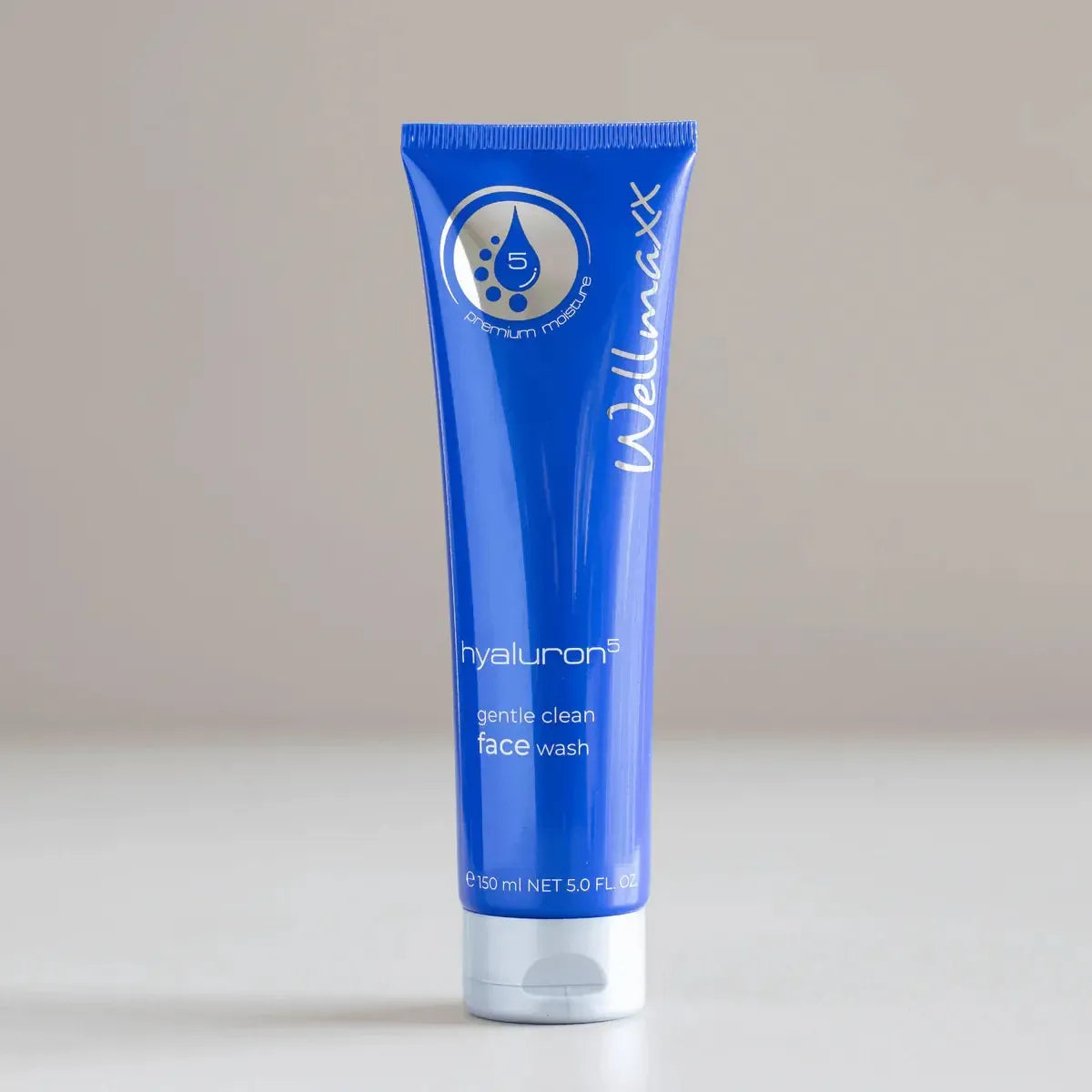
For daily cleansing, try the hyaluron⁵ gentle clean face wash. It cleanses gently and is designed for sensitive skin. The basiccare calming tonic is fragrance-free and alcohol-free and prepares the skin for the next step in your routine. For a cleanser with Aloe Vera, the skineffect supreme foam cleanser is a vegan option.
Recheck your skin type every few months, as identifying it correctly also depends on the season, age and lifestyle. If redness, itching or flaking persists, speak to a dermatology professional.
Common questions
What is the quickest way to identify my skin type? The tissue test shows where your skin produces oil in just a few minutes. For a more accurate picture, use the wash-and-wait method over two days.
Can my skin type change? Yes, with age, hormonal changes or significant changes in climate. Your skin condition also fluctuates from day to day.
How can I identify dry skin? Typical signs include tightness, flaking and fine lines. The skin often looks matte and reacts quickly to cold and wind.
Knowing your skin type helps you care for it more effectively and avoid many unsuitable purchases. The Wellmaxx Swiss range includes products for gentle cleansing, hydration and sensitive skin. Explore now.
Frequently asked questions
How can I determine my skin type at home?
Wash your face with a gentle cleansing foam and pat it dry carefully, without applying moisturizer afterward. Wait about an hour, then observe the skin on your forehead, nose, chin and cheeks. If the T-zone is particularly shiny, this suggests combination skin. If your entire face feels tight and has flaky patches, dry skin is likely. If your whole face is very shiny, your skin is more likely oily. If your skin burns, itches or reddens easily, it is sensitive. Repeat the test on several days, as skin condition fluctuates.
What is the difference between skin type and skin condition?
Skin type is your skin's underlying, usually inherited nature, including how much sebum it produces. Skin condition, by contrast, is temporary and can be influenced by weather, stress, hormones, lack of sleep or your choice of skincare products. Skin can appear dry in winter even if it is naturally more oily. That is why you should observe your skin type over several weeks and at different times before making major changes to your skincare routine.
How can I tell if I have dry skin?
Dry skin often feels tight, especially after cleansing. It can look flaky or rough, fine lines become visible more quickly, and there is little shine. It is also often sensitive to cold and wind. Many people confuse dry skin with a lack of moisture. A lack of moisture is typically relieved by hydration, whereas oily skin produces too much sebum. Wellmaxx Swiss Hyaluron skincare, such as the hyaluron⁵ fresh cleansing tonic for CHF 24.50, can help hydrate the skin after cleansing.
When should I see a professional about skin problems?
If redness, itching, flaking or burning persists for more than a few weeks or worsens despite suitable skincare, it is worth seeing your family doctor or a dermatologist. You should also seek medical advice about unusual changes to moles or sores that do not heal. A self-test does not replace a professional diagnosis, but it can help you describe your skin more clearly at your appointment.


