


Table of contents
- Dehydrated and dry skin: Why the distinction matters
- Identifying dehydrated skin: The quick self-test
- Dehydration in oily and combination skin
- Caring for dehydrated skin: Hydrate and bind water
- Caring for dry skin: Replenish lipids and strengthen the barrier
- Ingredients compared: What to use and when
- When to see a dermatologist about skin concerns
- Conclusion: The difference determines the right care
- Frequently asked questions
Last updated: October 7, 2026
Dehydrated and dry skin: Why the distinction matters
Dehydrated skin is a temporary condition caused by a lack of water, while dry skin is a skin type that lacks lipids. Understanding this difference is the most important step toward skincare that actually works. Confusing the two can lead you to choose the wrong cream and wonder why your skin still feels tight.
The reason is simple: Both conditions feel similar. Skin feels tight, flakes and looks tired. But the underlying causes are entirely different.
- Dry skin is caused by a lack of lipids, the fats that form the skin barrier.
- Dehydrated skin is caused by a lack of water, regardless of how much oil the skin produces.
- Both conditions can occur at the same time, especially in sensitive skin and during winter.
The good news: Once you know what you're dealing with, skincare becomes much simpler. Below, we'll show you how to tell the difference yourself in just a few minutes and which care for dry or dehydrated skin really helps.
Identifying dehydrated skin: The quick self-test
The most reliable way to identify dehydrated skin is with a structured test after cleansing. Wash your face with a mild cleanser and wait 30 minutes without applying anything. Then check how your skin feels.
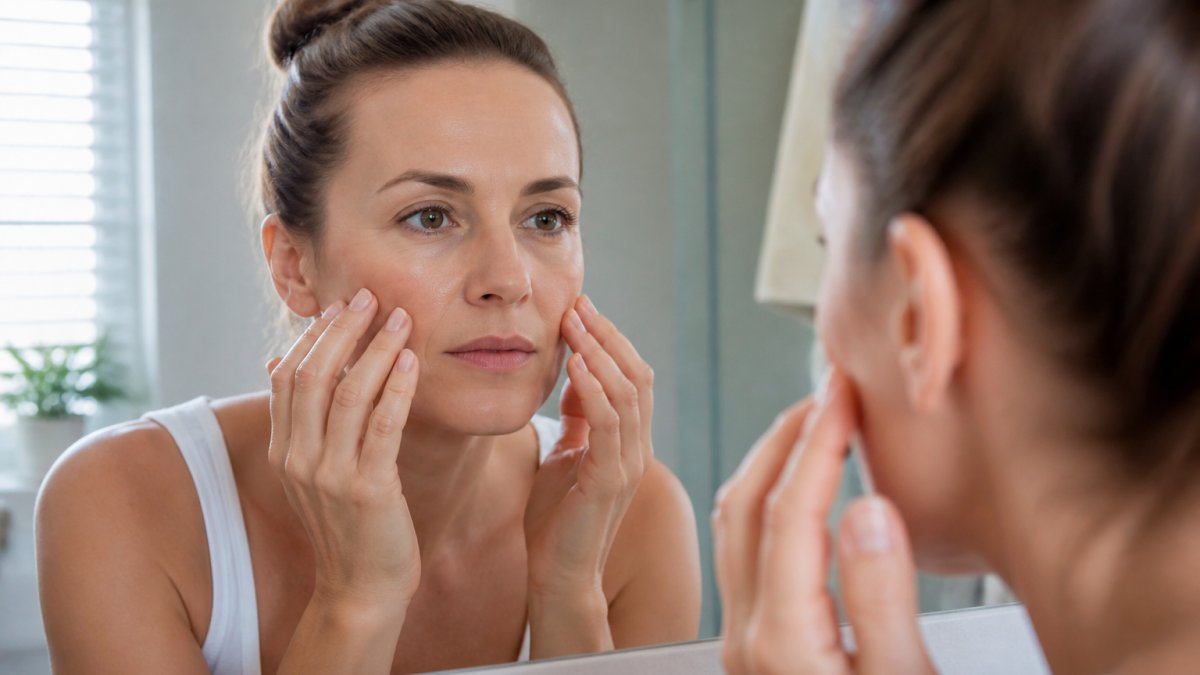
How to perform the test in four steps
- Cleanse with a mild, fragrance-free product and lukewarm water. Hot water makes tightness worse and can skew the results.
- Pat your face dry gently, without rubbing. Rubbing further irritates the barrier.
- Wait 30 minutes at normal room temperature without applying cream, serum or makeup.
- Assess tightness, shine and flaking separately - only together do they provide a clear picture.
Five signs of dehydration
- Tightness immediately after cleansing that does not ease after an hour.
- Fine lines, particularly visible on the forehead and cheeks, that disappear after applying cream.
- Dull complexion, looking tired even after a good night's sleep.
- Shiny areas on the forehead or nose while the cheeks feel tight.
- Flaky skin that does not feel smooth despite regular skincare.
What the test cannot tell you
A self-test provides clues, not a diagnosis. It cannot distinguish between temporary dehydration and a skin condition that needs treatment, such as contact dermatitis or seborrheic dermatitis. If you're unsure whether your symptoms can be managed with self-care, seeing a dermatologist is the safer option. The test is no substitute for a professional assessment.
If your skin feels tight after 30 minutes but also has shiny areas, it is probably dehydrated rather than dry. This distinction is key to choosing the right care.
Setting realistic expectations for results
How quickly your skin improves depends on its condition. Dehydrated skin often looks fresher within a few days because its moisture levels are replenished more quickly. Dry skin takes longer because the barrier must first be rebuilt - expect several weeks of consistent care. Track your progress weekly rather than daily to avoid losing sight of real changes.
Dehydration in oily and combination skin
Oily and combination skin can also be dehydrated, a point most guides overlook. Sebum production tells you nothing about how much water is stored in the skin. An oily forehead can still lack water.
This leads to a typical pattern: Skin looks shiny but feels rough. Pores are visible, and cheeks feel tight. Many people respond by using drying products, which further increases water loss. The skin then produces even more sebum to protect itself.
If you have oily or combination skin and also notice tightness, a lightweight, water-based moisturizer is a better choice than a rich cream. Lightweight care means hydrating without burdening the pores.
Caring for dehydrated skin: Hydrate and bind water
Skincare for dehydrated skin relies on humectants that bind water in the skin. Hyaluronic acid and glycerin are among the best-known ingredients in this category. They attract water and retain it in the upper layers of the skin.
The order matters. Moisture needs a carrier, or it will evaporate again.
Applying serum to damp skin: How to get the most from hyaluronic acid
Applying serum to damp skin is the most important step for dehydrated skin. Hyaluronic acid binds water from the environment and deeper layers of the skin. Apply the serum to slightly damp skin after cleansing so it has enough water to bind.
Follow with a cream to lock in moisture. Without this step, hyaluronic acid can even draw moisture from the skin in a dry environment.
The concentrates super hydra boost from Wellmaxx Swiss is suitable for this step. Its combination of long-, medium- and short-chain hyaluronic acids hydrates the skin's surface while also working deeper down. The concentrate is suitable for all skin types and is applied after cleansing, before moisturizer.

Caring for dry skin: Replenish lipids and strengthen the barrier
Dry skin needs lipids to rebuild the skin barrier. Ceramides, plant oils and natural fats fill the gaps between skin cells and reduce water loss. A rich moisturizer is ideal here.
concentrates super hydra boost →
The difference from dehydrated skin is fundamental. Dry skin lacks the protective layer that keeps water in the skin in the first place. Moisture alone is not enough because it escapes through the damaged barrier.
The hyaluron⁵ day & night cream rich combines both approaches. It contains 5 types of hyaluronic acid for hydration, plus beneficial natural oils and a special winter pea extract that strengthens the skin barrier. The cream protects against environmental stressors and visibly reduces fine lines.

| Feature | Dry skin | Dehydrated skin |
|---|---|---|
| Cause | Lack of lipids | Lack of water |
| Skin type | Permanent skin type | Temporary condition |
| Typical signs | Flaky, rough, tight | Dull, fine lines, possible shine |
| Skincare focus | Replenish lipids, strengthen barrier | Hydrate, bind water |
| Suitable texture | Rich cream | Lightweight serum or gel |
Ingredients compared: What to use and when
Ingredients work differently depending on whether skin lacks water or lipids. To help choose products, divide them into three categories: Humectants bind water, lipids replenish the barrier, and occlusives reduce water loss at the surface. The overview below explains the key ingredients and how to use them.
Humectants: Bind water
- Hyaluronic acid: Binds water in the skin. Ideal for dehydrated skin and particularly effective in multiple molecular sizes. Apply to slightly damp skin after cleansing, then follow with a cream to lock in moisture.
- Glycerin: Attracts and retains moisture. Suitable for all skin types, including oily skin. Well tolerated and found in many basic skincare products.
- Panthenol: Supports regeneration and soothes irritated skin. Useful for both conditions, especially after frequent cleansing.
Lipids: Rebuild the barrier
- Ceramides: Fill lipid gaps in the skin barrier. A first choice for dry skin. Most effective when combined with cholesterol and fatty acids, as found in barrier-repair creams.
- Plant oils: Form a protective film on the skin and reduce water loss. Jojoba oil and squalane are lightweight options, while shea butter and avocado oil are better suited to very dry skin.
- Fatty acids (e.g., linoleic acid): Support the barrier and have anti-inflammatory properties. Often better tolerated than heavy oils by acne-prone skin that is also dehydrated.
Occlusives: Lock in moisture
- Squalane: A lightweight, skin-compatible lipid that locks in moisture without weighing skin down. Suitable for combination and oily skin.
- Waxes and butters: Form a denser film and are suitable for dry skin and rough patches. Use sparingly on oily skin.
- Petrolatum: A powerful occlusive that significantly reduces water loss. Suitable for cracked or heavily stressed areas, but not for use all over the face on oily skin.
Peptides and other supporting ingredients
- Peptides: Support firmness and smooth fine lines. Useful for both skin conditions from age 30 onward.
- Niacinamide: Strengthens the barrier and regulates sebum production. Often a good addition for dehydrated combination skin; start with a low concentration.
How to combine ingredients
Order matters here too: First apply humectants to damp skin, then use lipids or occlusives to lock in moisture. If you have both conditions, combine a hydrating serum with a rich cream. For dehydrated skin that also tends to be oily, the hyaluron⁵ moist intense gel concentrate. Its fragrance-free gel texture is ultra-lightweight, absorbs quickly and does not burden the pores. It combines 5 types of hyaluronic acid with a naturally derived hydro system.

For dry skin showing the first signs of lost elasticity, try the hyaluron⁵ collagen booster serum concentrate. The formula with 5 types of hyaluronic acid is enriched with tripeptides that can stimulate the skin's own collagen production. The serum leaves skin looking firmer and plumper.
When to see a dermatologist about skin concerns
Skin concerns should be assessed by a dermatologist if they persist for several weeks despite consistent care. Consult a professional if you experience:
- Persistent redness that does not subside or spreads
- Severe itching or a burning sensation
- Cracked, bleeding skin or open sores
- Sudden changes to moles or new skin patches
- Symptoms that begin after starting a new skincare range and do not subside
These signs may indicate a skin condition that needs treatment and requires a medical diagnosis. Self-care is no substitute for a medical assessment.
Another often overlooked factor: Skin changes with the seasons and climate. Indoor heating dries out skin in winter, while dry summer heat puts stress on the barrier. Adjust your routine accordingly instead of using the same products all year.
How long it takes for skin to improve depends on its condition. Dehydrated skin often looks fresher within a few days because its moisture levels are replenished more quickly. Dry skin takes longer because the barrier must first be rebuilt. Expect several weeks of consistent care.
Conclusion: The difference determines the right care
The difference between dehydrated and dry skin is not just a technicality; it is the foundation of effective skincare. Confusing water with lipids means investing time and money in products that do not suit your skin's condition.
First, use the self-test to check whether your skin feels tight or looks shiny. If it lacks water, choose hyaluronic acid and apply your serum to damp skin. If it lacks lipids, you need ceramides, oils and a rich cream. For oily skin that lacks moisture, choose lightweight, water-based textures rather than heavy creams.
Tightness, fine lines and a dull complexion don't have to be permanent. Wellmaxx Swiss offers targeted solutions for both skin conditions with the Hyaluron⁵ range: concentrates super hydra boost for intensive hydration for all skin types, hyaluron⁵ moist intense gel concentrate as lightweight care for combination and oily skin, and hyaluron⁵ day & night cream rich for dry skin with a weakened barrier. Explore the range now and give your skin the care it needs.
Frequently asked questions
How can you tell the difference between dehydrated and dry skin?
Dehydrated skin lacks water, while dry skin lacks lipids. A simple test: Pinch a fold of skin on your cheek. If it stays raised briefly, your skin lacks moisture. If your skin feels rough and flaky, it lacks oils. Dehydration can affect any skin type, including oily skin, while dry skin is a permanent skin type.
Can oily skin also be dehydrated?
Yes, this is common. Oily skin produces a lot of sebum but can still lack water, for example due to harsh cleansers, air conditioning or indoor heating. Typical signs include a shiny T-zone along with tightness and fine lines. A lightweight, fragrance-free moisturizer with hyaluronic acid helps without burdening the pores.
How long does it take for dehydrated skin to recover?
With consistent moisturizing, skin often looks fresher within a few days. A noticeable improvement in the skin barrier usually takes two to four weeks. It's important to replenish moisture regularly and avoid further stressing the skin with excessively hot water or frequent exfoliation.
Should you apply serum to damp or dry skin?
Applying serum to damp skin is beneficial because humectants such as hyaluronic acid can bind water and retain it in the skin. After cleansing, lightly dampen the skin, work in the serum and immediately apply a cream on top. This seals in moisture and protects against water loss.


