

Last updated: 25 October 2026
Quick overview
After-sun care for tanned skin starts with a lukewarm shower and applying around 20 to 30 ml of lotion to dry skin. Apply it again morning and evening for the first two to three days; after that, one evening application is enough. If blisters develop, stop applying lotion and seek medical advice.
- Use around 10 to 15 ml of lotion for both arms combined, and 15 to 20 ml for both legs.
- After applying, allow two to three minutes for the lotion to absorb before getting dressed.
- From day 4, one application in the evening is enough until your skin feels supple again.
- Once opened, an after-sun lotion usually lasts around six to twelve months.
- If you have known sensitivities, first test a small area on your forearm and wait 24 hours.
Table of contents
- How to apply after-sun lotion: a step-by-step routine
- Moisturising tanned skin: what really matters
- After-sun for sunburn: when skincare helps and when it doesn't
- Beneficial ingredients and potential sensitivities
- Care for different skin types and body areas
- How long does after-sun lotion last and how often should you reapply it?
- What after-sun can't do: tanning, skin renewal and realistic expectations
- Discover the right after-sun care for your skin
- Frequently asked questions
How to apply after-sun lotion: a step-by-step routine
An after-sun lotion is a lightweight body care product that soothes, cools and moisturises irritated and stressed skin after sun exposure.
The difference between skin that recovers and skin that flakes is rarely down to the product alone. It's how you use it.
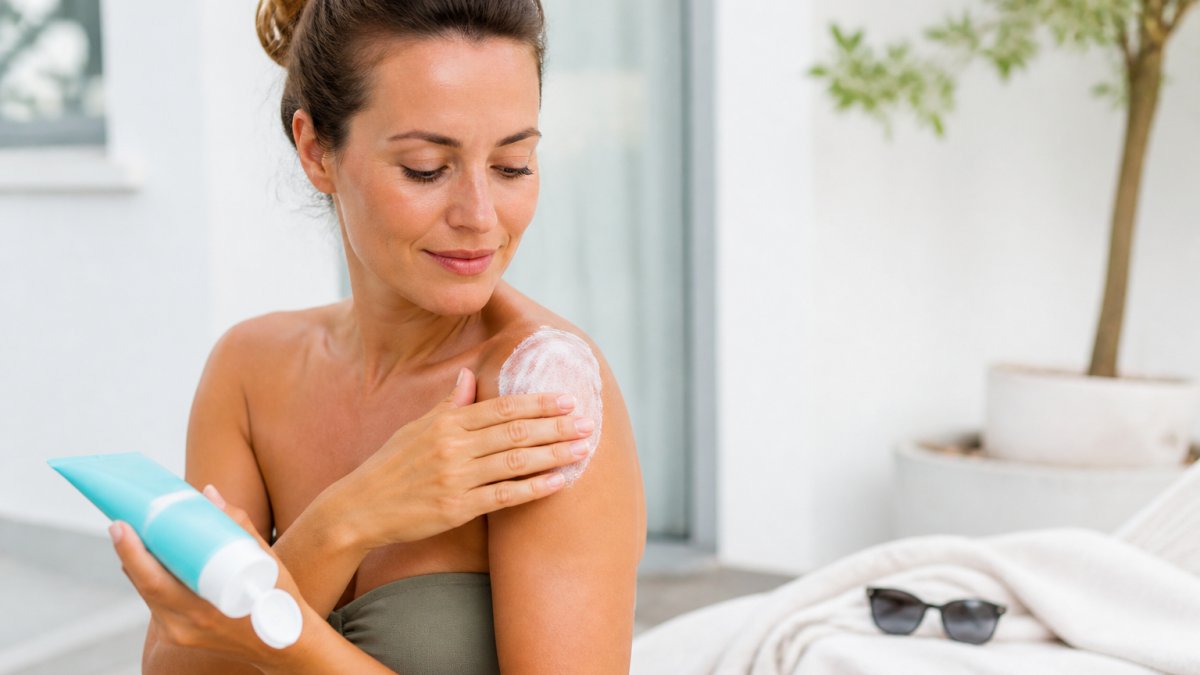
Step 1: Cleanse your skin before applying
The first step is cleansing. After a day in the sun, sweat, sand, salt and sunscreen residue remain on your skin. These residues prevent any lotion from absorbing properly.
Here's how to do it:
- Take a lukewarm shower, not a hot one. Hot water strips your skin of even more moisture.
- Avoid harsh scrubs or brushes. Your skin barrier is more sensitive than usual after UV exposure.
- Gently pat dry instead of rubbing.
- Apply lotion only once your skin is completely dry.
A common mistake is applying lotion to sweaty skin. The lotion then sits on the surface and barely absorbs. Leaving a little moisture on your skin after showering and massaging the lotion into slightly damp skin helps it spread - especially with richer formulas.
Step 2: The right amount and order
The right amount is more than most people use. A hazelnut-sized amount per body area isn't enough. As a guide: around 10 to 15 ml for both arms combined, around 15 to 20 ml for both legs, and around 10 to 15 ml for the torso.
The order:
- First, apply any lightweight serums or gels.
- Then finish with the after-sun lotion.
- Finally, apply more to especially dry areas such as elbows and knees.
Important: Massage the lotion into your skin until it has absorbed. Residue left on the surface does little good.
Step 3: How often to apply in the following days
Skin renewal after UV exposure takes several days. That's why a single application on the first evening isn't enough. The following routine works well:
- Day 1 (immediately after sunbathing): After cooling down and cleansing, apply a generous layer. If needed, reapply to particularly irritated areas after two to three hours.
- Days 2 to 3: Massage in a thinner layer morning and evening to replenish lost moisture.
- From day 4: One application in the evening is enough until your skin feels supple again.
A common mistake is applying lotion only on the first evening. Caring for your skin twice a day during the first two to three days supports recovery when it loses the most moisture.
Step 4: When after-sun is enough and when to seek medical advice
This routine helps with mild redness and irritated skin, but not with actual sunburn accompanied by blisters. This distinction is essential for safe use.
- Mild redness: The skin feels warm and tight but isn't painful when pressed. A lotion can help cool and soothe it - the routine described above is suitable.
- Actual sunburn: Pain, blisters and significant swelling. In this case, the skin needs medical attention. Skincare products are no substitute for medical treatment.
If you're unsure what to do after intense UV exposure or a visit to a tanning salon, our article on skincare after using a sunbed offers specific advice on proper application.
Moisturising tanned skin: what really matters
Tanned skin is not healthy skin when it comes to moisture balance. A tan develops when the skin produces melanin as a protective response to UV exposure.
Moisture loss shows up as tightness, rough patches and a dull appearance. Applying lotion only in the evening doesn't replenish enough moisture. It's not just the amount that matters, but the skin's ability to retain moisture. That's where aftercare comes in.
What locks in moisture - and what only masks dryness temporarily
Moisturising ingredients can broadly be divided into three groups:
- Humectants such as glycerin and panthenol draw water from the environment and deeper layers of the skin and hold it in the outermost layer. They work quickly but need a protective layer to prevent the water from evaporating again.
- Emollients such as coconut oil, silk proteins and vitamin E smooth the skin's surface and lock in moisture. They make skin supple but don't replace water.
- Occlusives form a film on the skin and reduce evaporation. After-sun lotions usually contain lightweight occlusives to keep the texture from feeling heavy.
A good after-sun lotion combines humectants and emollients. If you use only an oily cream without adding water, your skin may feel supple briefly, but the tightness remains. A lightweight gel alone may cool the skin, but it won't retain enough moisture overnight.
Moisturise in two steps
Moisturise in two steps.
- Soothe and cool immediately after sunbathing. Apply a lightweight lotion with aloe vera or panthenol while the skin is still warm. The cooling effect reduces the sensation of heat, and moisture can penetrate the skin while it is still receptive.
- Continue caring for your skin morning and evening in the following days. Apply a thinner layer in the morning to protect against dryness during the day, and a more generous amount in the evening to support overnight recovery. This replenishes the moisture lost throughout the day.
As a daily guide, one full-body application takes around 20 to 30 ml of lotion - approximately two to three tablespoons. If you use less, you often only cover the surface and don't reach the drier layers.
Dehydrated or dry? The difference determines the right care
If you're unsure whether your skin is dehydrated or dry, it's worth looking at the differences between dehydrated and dry skin. The right care depends on this distinction: dehydrated skin needs moisture and humectants, while dry skin also needs lipids and emollients. Confuse the two and you could spend months treating the wrong concern.
A simple test: tightness and rough patches that disappear for a few hours after applying lotion are more likely to indicate dehydration. If your skin remains rough and flaky even after applying lotion, it often lacks lipids.
After-sun for sunburn: when skincare helps and when it doesn't
After-sun helps with mild redness and irritated skin, but not with actual sunburn accompanied by blisters. This distinction is essential.
Mild redness: The skin feels warm and tight but isn't painful when pressed. A lotion can help cool and soothe it.
Actual sunburn: Pain, blisters and significant swelling. In this case, the skin needs medical attention. Skincare products are no substitute for medical treatment.
Watch out: If blisters develop, stop applying lotion and don't open them. Doing so increases the risk of infection.
Beneficial ingredients and potential sensitivities
Not every active ingredient suits every skin type. We distinguish between three groups.
Soothing and cooling: Aloe vera, panthenol and willowherb help relieve irritation. These ingredients are generally well tolerated, but can cause contact reactions in rare cases.
Moisturising: Silk proteins, coconut oil and vitamin E support the skin barrier and retain water.
Supporting your tan: Tyrosine and plant extracts are used in tanning care products. They have a supporting effect.
Watch out: If you have known sensitivities, first test a small area on your forearm and wait 24 hours. We explain how sensitive skin adjusts to new skincare in our guide to helping sensitive skin adjust to new skincare.
Care for different skin types and body areas
One product rarely works for everyone. Different body areas have different needs.
- Shoulders and décolletage: Lots of UV exposure, thin skin. Choose a lightweight, cooling texture.
- Legs and arms: Larger surface area, greater need for moisture.
- Back: Often hard to reach and needs more lotion.
For dry skin, a richer lotion is fine. For blemish-prone skin, lightweight formulas are a better choice.
If you want to improve your routine long term, our skincare routine for firmer skin is a useful addition.
How long does after-sun lotion last and how often should you reapply it?
Once opened, an after-sun lotion usually lasts one season, or around six to twelve months. After that, the active ingredients become less effective.
As for reapplying: use it twice daily for the first two to three days after sunbathing. After that, one evening application is enough until your skin feels supple again.
A common mistake is applying lotion only on the first evening. Skin renewal takes several days. This is precisely when your skin needs support.
What after-sun can't do: tanning, skin renewal and realistic expectations
After-sun doesn't prolong a tan or prevent skin ageing. It supports recovery but is no substitute for sun protection.
Peeling after sunbathing can't be prevented. It's part of natural skin renewal. A good lotion makes the process more comfortable, not invisible.
After-sun doesn't repair sun damage either. It relieves symptoms. If you want to support skin elasticity long term, you need a daily routine, not just a week of care on holiday.
After-sun is one part of the routine, not a cure-all.
Discover the right after-sun care for your skin
We offer three after-sun lotions for different needs:
| Product | Price | Key features | Ideal for |
|---|---|---|---|
| Suncare Relaxing Lotion | CHF 27.00 | Vitamin E, aloe vera, willowherb, rosemary extract | stressed skin after sunbathing |
| TanTastic Excellent After Sun Lotion | CHF 22.00 | Silk proteins, tanning enhancer tyrosine, panthenol | maintaining a tan and supporting elasticity |
| Tan Maxximizer Citric Orange | CHF 13.00 | Orange extract, coconut oil, cooling bisabolol | refreshing care with a fruity fragrance |
All three are designed for daily use after sunbathing. Your choice depends on whether you want to soothe, tan or refresh your skin.
Frequently asked questions
When should you apply after-sun lotion after sunbathing?
Apply after-sun lotion within 30 to 60 minutes of sunbathing if possible, after rinsing off sand, sweat and salt with clean water. Your skin is still receptive at this point, allowing you to replenish moisture lost through UV exposure early on. Apply generously to your back, shoulders, arms and legs, and let the lotion absorb for a few minutes before getting dressed. For sensitive skin, a lightweight, cooling formula is a good choice.
Does after-sun lotion help with sunburn?
After-sun lotion can relieve mild redness and tightness and soothe the skin by moisturising and cooling it. However, it is no substitute for medical assessment if you have severe sunburn with blisters, swelling or fever. Gently cool your skin, avoid fabrics that rub and choose a simple lotion without alcohol or fragrance. After-sun care supports healing, but it can't speed it up indefinitely.
How long does after-sun lotion last and how often should you reapply it?
The moisturising effect of an after-sun lotion usually lasts a few hours, depending on the formula and your skin's condition. Apply generously on the evening after sunbathing and continue using the lotion morning and evening in the following days until the tightness subsides. For dry or irritated skin, an additional application in the afternoon may help. How long a lotion actually lasts also depends on ingredients such as aloe vera, panthenol or vitamin E.
Which ingredients are beneficial in an after-sun lotion?
Beneficial ingredients include moisturising and soothing ingredients such as aloe vera, panthenol, vitamin E and plant extracts. Aloe vera cools and retains moisture, panthenol supports the skin barrier, and vitamin E provides antioxidant protection against UV stress. For sensitive skin, alcohol and strong fragrances should be present in small amounts or avoided altogether. Check the ingredients list before buying and test new products on a small area of skin first to avoid adverse reactions.
Aftercare for tanned skin can make the difference between skin that recovers from summer and skin that suffers for it. Cleanse, apply lotion generously and continue caring for your skin over several days, and you'll soon notice the difference. Wellmaxx Swiss offers ready-to-use formulas with aloe vera, vitamin E and silk proteins, dermatest® tested and designed to support skin recovery. Get started with Wellmaxx Swiss and give your skin what it really needs after sunbathing.


