

Table of Contents
- What dehydrated skin is and how it differs from dry skin
- Causes of moisture deficiency: Why the skin barrier suffers
- Hyaluronic acid skin effect: What moisture-binding ingredients do
- Face moisturizer routine: The right skincare routine step by step
- Dehydrated skin and other skin conditions: Assessing interactions correctly
- Everyday tips for moisture balance: Drinking habits and skin protection
- Conclusion: How to use hydrating care correctly for dehydrated skin
- Frequently Asked Questions
Last updated: 17 September 2026
What dehydrated skin is and how it differs from dry skin
Dehydrated skin is a skin condition in which the skin lacks water, not oil. Dry skin, by contrast, is a skin type that lacks the body's own lipids. This distinction determines whether hydrating care works for dehydrated skin or whether you are applying the wrong product. If you confuse the two conditions, you often reach for a rich cream even though the skin actually needs water.
Many people with dehydrated skin reach for heavy ointments and wonder why their skin still feels tight. The reason: oil-rich products can protect the barrier, but they do not replace water. Conversely, a light moisturizer can further dry out skin that is truly low in lipids.
Dehydrated skin can affect any skin type, including oily or combination skin. Dry skin, on the other hand, is a permanent condition that needs lipid-rich care. This distinction is at the heart of every effective skincare decision.
The diagnosis checklist for non-specialists: Which skin condition is present?
The following checklist helps you roughly classify your skin condition. It does not replace a dermatological diagnosis, but it provides practical guidance for choosing products.
- The skin feels tight after washing, but quickly calms down after applying cream → more likely dehydrated
- The skin flakes and feels rough all the time → more likely dry
- Fine lines look more pronounced in the morning and smooth out over the course of the day → typical of moisture deficiency
- The skin shines, but at the same time looks dull and tired → combination skin with dehydration
- Redness and a pulling sensation after cleansing → sign of a weakened skin barrier
- The skin reacts to new products quickly with burning → sensitive skin that may also be dehydrated
If several points in the first category apply, the focus should be on moisture. For the points in the second category, you also need lipids.
Causes of moisture deficiency: Why the skin barrier suffers
The skin barrier keeps water in the skin and irritants out. If it is weakened, transepidermal water loss increases, and the skin loses moisture faster than it can replenish it. This is exactly where any sensible hydrating care for dehydrated skin comes in.
The most common triggers include:
- Washing too often with harsh surfactants
- Heated air and temperature fluctuations
- UV exposure, such as after tanning beds or sunbathing
- Alcohol-based products and peels
- Stress and lack of sleep
- Certain medications and hormonal changes
A common mistake is to increase cleansing when the skin feels tight. This makes the problem worse because it further weakens the barrier. Less is more here: gentle cleansing, then moisture immediately.
Nutritional influences on moisture balance
What you eat affects the skin barrier. Unsaturated fatty acids, for example from nuts, seeds, and oily fish, are building blocks of the lipid layer. If they are missing for a long time, the skin can store less water.
Enough water and a protein-rich diet also support regeneration. Vitamin C contributes to collagen formation, zinc to wound healing. A deficiency often first shows up in the skin. If you chronically drink too little, even the best moisturizer can only compensate to a limited extent.
Hyaluronic acid skin effect: What moisture-binding ingredients do
Hyaluronic acid is a substance produced by the body that binds water and stores it in the skin. As a moisture-binding active ingredient, it attracts water and holds it in the upper layers of the skin, making the skin look plumper and smoother. Glycerin works similarly, drawing water from the environment and supporting moisture balance. But the effect depends crucially on the molecular size and how it is integrated into the skin barrier.
Molecular size is key for a good result. Short-chain hyaluronic acid penetrates deeper, while long-chain hyaluronic acid forms a moisture-retaining film on the skin surface. Combinations of several chain lengths cover both levels.
concentrates super hydra boost →
- Panthenol (provitamin B5): attracts water and soothes irritated skin.
- Sorbitol: a sugar alcohol that binds moisture and makes the skin supple.
- Amino acids and electrolytes: support the skin's natural moisturizing factor (NMF).
- Ceramides: strengthen the barrier and reduce transepidermal water loss.
Face moisturizer routine: The right skincare routine step by step
An effective routine for dehydrated skin follows a fixed order: cleanse, add moisture, lock in moisture. The steps build on one another, so the order is more important than the amount of product.
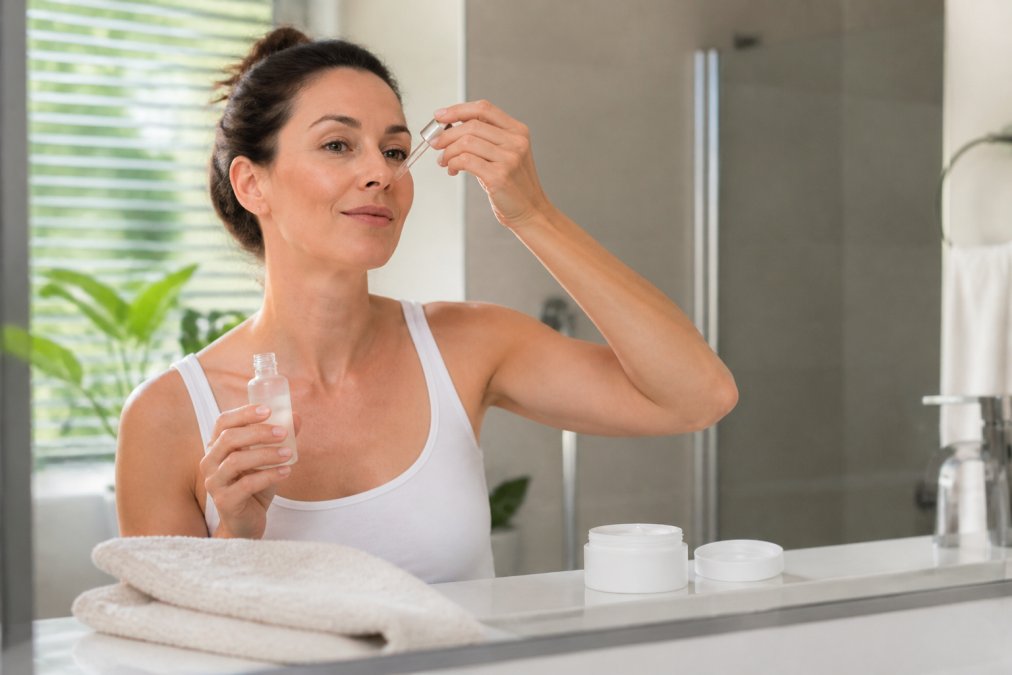
- Gentle cleansing. Use a pH-neutral cleanser without alcohol. Skip exfoliation in the morning.
- Moisturizing serum on slightly damp skin. A serum with hyaluronic acid or glycerin absorbs better on damp skin.
- Moisturizer on top. It locks in moisture and supports the skin barrier.
- A richer version in the evening. Regeneration happens overnight, so care can be heavier then.
- UV protection during the day. Without sunscreen, any facial moisturizer is quickly undone.
Dehydrated skin and other skin conditions: Assessing interactions correctly
Dehydrated skin rarely occurs on its own. With oily skin, moisture deficiency can even increase sebum production because the skin tries to compensate for water loss. With sensitive skin, a weakened barrier further increases reactivity.
| Skin condition | Moisture needs | Suitable texture | What to look for |
|---|---|---|---|
| Dehydrated, oily | High | Light gel, water-based | Fragrance-free, non-comedogenic |
| Dehydrated, sensitive | High | Light serum plus mild cream | Few ingredients, no alcohol |
| Dry, mature | High plus lipids | Rich cream | Ceramides, glycerin, hyaluronic acid |
| Combination skin | Medium to high | Serum plus light cream | Apply to specific zones |
Everyday tips for moisture balance: Drinking habits and skin protection
The following strategies have proven effective for everyday life:
- Gentle cleansing instead of foam with harsh surfactants: Use a pH-neutral cleanser without alcohol. Skip exfoliation in the morning.
- Apply moisturizer while the skin is still slightly damp after washing: This allows hyaluronic acid to bind water and locks in moisture.
- Offset heated air with a humidifier: Ideal humidity is 40-60 %.
- After tanning beds or a sunny day, use a soothing hydrating treatment: UV radiation weakens the barrier and increases transepidermal water loss.
- Use a hydrating mask once or twice a week: Look for ingredients such as hyaluronic acid, glycerin, or panthenol.
- Get enough sleep: Regeneration happens mostly at night. Lack of sleep increases stress hormone levels and can weaken the barrier.
- Stress management: Chronic stress can impair the skin barrier. Relaxation techniques such as yoga or meditation can help.
For a suitable selection of hydrating care for dehydrated skin, it is worth taking a look at the series from Wellmaxx Swiss. The products combine scientifically tested high-tech active ingredients with skin-care formulas to support skin regeneration and improve skin elasticity.
Conclusion: How to use hydrating care correctly for dehydrated skin
Dehydrated skin needs water, not just oil. If you know the difference from dry skin, you can choose products more precisely and avoid the mistake of trying to solve a moisture problem with heavy creams. The key is moisture-binding ingredients such as hyaluronic acid and glycerin, a consistent routine, and protection of the skin barrier.
Frequently Asked Questions
How do I tell the difference between dry and dehydrated skin?
Dry skin is caused by a lipid deficiency, meaning a lack of fats in the skin barrier. Dehydrated skin, by contrast, has too little water in its moisture reserves, even though enough lipids may be present. Typical signs of dehydrated skin are tightness, a dull complexion, and fine lines that often disappear immediately after applying moisturizer. Dry skin, by contrast, feels rough and flakes. A simple diagnosis checklist: tightness plus shiny combination skin points more to dehydration, while rough and flaky patches point more to dry skin.
What gives the skin extremely intense moisture?
Moisture-binding ingredients such as hyaluronic acid and glycerin draw water into the skin's surface and improve hydration. Hyaluronic acid can work at both the surface and deeper layers in different molecular sizes. A concentrate such as Super Hydra Boost with four hyaluronic acid chains combines this effect with Marine Collagen and apple stem cells. It is important to apply the serum to slightly damp skin and then use a rich moisturizer so the moisture is sealed in.
Which ingredients help with moisture deficiency?
In addition to hyaluronic acid and glycerin, ceramides, panthenol, and probiotic extracts support the skin barrier. Vitamin C can improve the appearance of the skin by promoting regeneration. A water-in-oil emulsion is suitable for reducing transepidermal water loss. Look for fragrance-free formulas if your skin reacts sensitively. The Hyaluron⁵ moist intense gel concentrate series combines 5-fold hyaluronic acid with a naturally based hydro system and is fragrance-free.
How can I hydrate my skin without overdoing it?
Use a streamlined facial moisturizing routine: a light serum in the morning, a richer cream in the evening. Too many layers can disrupt the skin's balance. A moisture concentrate like Super Hydra Boost absorbs quickly and can be combined well with an existing routine. Observe your skincare needs over two to three weeks and adjust the texture to the season. In winter, a rich cream helps; in summer, a gel is often enough.
What should I do if the skin lacks moisture and the care isn't working?
First, check whether a condition such as atopic dermatitis or a thyroid disorder may be present, and have it medically evaluated. After that, it is worth checking the order of your skincare: serum before cream, cream before sunscreen. Avoid hot showers and alcohol-based toners. Supplement your diet with water-rich foods and omega-3 fatty acids. If the skin does not improve after four weeks, a dermatological consultation may be useful.
Can I combine moisturizer with beauty tools?
Yes, beauty tools such as microneedling rollers or cooling devices can be integrated into a facial moisturizing routine. It is important to use the tool on cleansed skin and then apply a moisturizing serum so the active ingredients are absorbed better. If you have sensitive skin, you should initially limit use to once a week. The tools also work with your existing creams, so you do not need to replace your entire skincare range.
How long does it take before I see results?
Initial effects such as a fresher complexion and less tightness often become noticeable after just a few days. A measurable improvement in skin hydration usually takes two to four weeks of regular use. The Hyaluron Anti-Aging Set indicates improved skin hydration by 64% and has been rated "very good" by Dermatest. Daily use and protecting the skin barrier are crucial so that moisture does not escape again.


