


Table of Contents
- Skincare Routine for Firmer Skin: What Really Matters
- What You Need for Your Routine
- Step 1: Gentle Cleansing for Face and Body
- Step 2: The Right Order for Your Facial Skincare
- Ingredients for Firmer Skin: What Supports Skin Firmness
- Sun Protection and Compatibility: Introducing Active Ingredients Safely
- Skincare After 60: What Changes with Age
- Conclusion: Your Routine for Firmer Skin
- Frequently Asked Questions
Last updated: October 5, 2026
Skincare Routine for Firmer Skin: What Really Matters
A skincare routine for firmer skin is a set schedule of cleansing, active ingredient care, and moisturizing that you follow morning and evening. It doesn't work overnight, but over months. That's where success and frustration part ways.
Many customers ask us at Wellmaxx Swiss whether it's really worth the effort. The honest answer: A cream won't smooth deep expression lines. It can support skin firmness, boost hydration, and help even out the skin's appearance. Reputable skincare doesn't promise more than that.

What skin really needs is consistency. According to the Swiss Society of Dermatology and Venereology, daily sun protection plays the most important role in slowing skin aging.
This 7-step plan shows you what to apply and in what order, which ingredients work well together, and how to gradually introduce them to sensitive skin.
What You Need for Your Routine
You need five products, not fifteen: a gentle cleanser, an active ingredient serum, a moisturizer, an exfoliant for once or twice a week, and sunscreen for daytime.
That covers everything an effective facial skincare routine can do. Anything beyond that is optional.
- Cleanser: gentle, alcohol-free, for face and body
- Serum: with hyaluronic acid or peptides
- Moisturizer: as the final step, morning and evening
- Exfoliant: gentle, once or twice a week
- Sunscreen: daily, even on cloudy days
If your skin has lost a lot of moisture over the summer, consider adding a rich body cream. Dry skin can look saggy sooner.

Step 1: Gentle Cleansing for Face and Body
Cleansing is the foundation of every skincare routine. It removes dirt, oil, and residue so that the products that follow can be absorbed.
The most common mistake is cleansing too aggressively. Foaming products with alcohol dry out the skin. This weakens the skin barrier, makes the skin feel tight, and can even cause it to produce more oil than before.
Here's how:
- Dampen your face with lukewarm water
- Massage in the cleanser with your fingertips; 30 seconds is enough
- Rinse thoroughly, including along the hairline
- Pat dry with a soft towel; don't rub
The same principle applies to the body. A mild shower gel is better than an exfoliating shower gel for everyday use. Your skin should feel soft, not dry.
Step 2: The Right Order for Your Facial Skincare
The order of facial skincare follows a simple rule: go from the thinnest texture to the thickest. Following this order helps you get more out of every product.
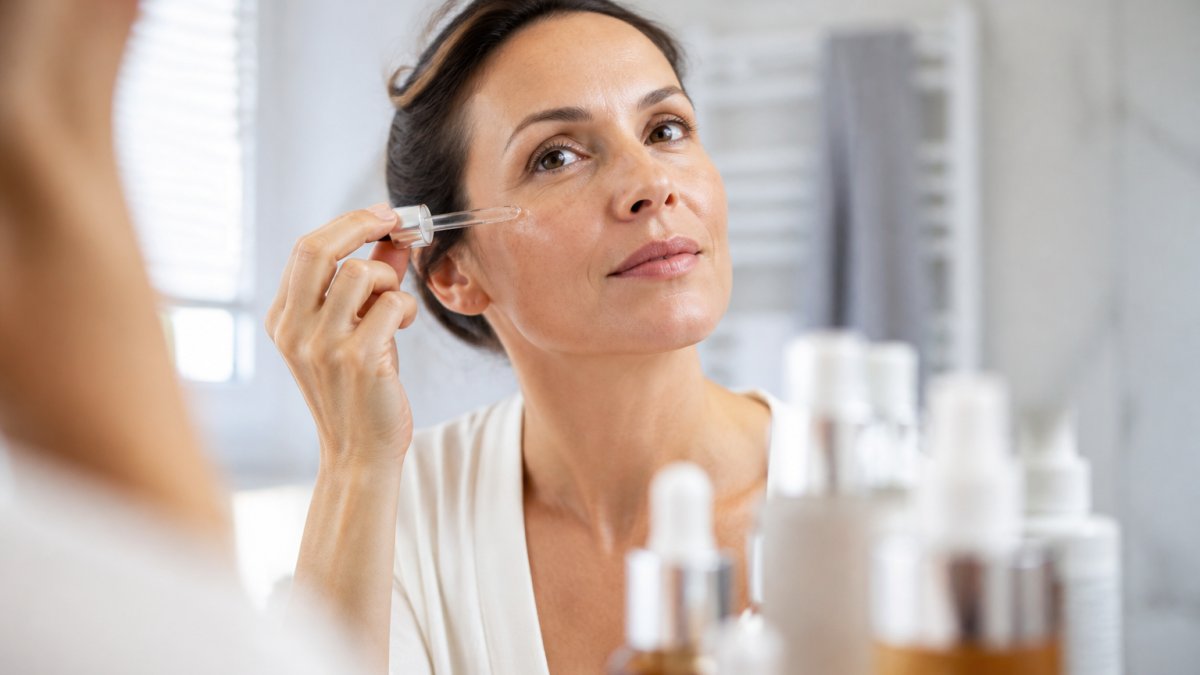
The correct morning routine:
- Cleanser
- Active ingredient serum
- Eye care
- Moisturizer
- Sunscreen
In the evening, skip the sunscreen. Everything else stays the same.
The reason for this order: A serum needs direct contact with the skin. Applying a cream first would hinder absorption. In turn, the cream seals in the active ingredients and retains moisture in the skin.
A practical tip from our experience: Wait about a minute between applying serum and cream. Your skin will no longer feel damp, and the cream will spread evenly.
Ingredients for Firmer Skin: What Supports Skin Firmness
Ingredients for firmer skin can be divided into four functional groups: humectants, peptides, antioxidants, and cell-renewing ingredients. None of them replaces collagen or elastin, but each can improve the skin's appearance in different ways.
Hyaluronic acid binds water in the upper layer of the skin. Skin looks plumper, and fine lines become less noticeable.
Peptides are short chains of amino acids. They signal the skin to stimulate its own collagen production. The effect takes weeks, not days.
Antioxidants such as vitamin C, vitamin E, or ferulic acid protect against environmental factors that accelerate skin aging. Vitamin C also helps with collagen synthesis. The challenge: Vitamin C is unstable and oxidizes quickly.
Cell-renewing ingredients such as retinoids (vitamin A derivatives) or bakuchiol are among the best-studied options for visible skin renewal. Retinoids speed up cell turnover and can stimulate collagen production.
In our own range, we combine several forms of hyaluronic acid with peptides. The hyaluron⁵ collagen booster serum concentrate combines a fivefold hyaluronic acid formula with tripeptides. Its lightweight texture absorbs quickly and pairs well with a cream.
Collagen in Skincare: What Serums Can Do
Collagen in skincare doesn't act as a building block, but as a humectant. The collagen molecule is too large to penetrate the skin. It sits on the surface and binds water there.
That's not a disadvantage. A well-formulated cream with collagen can make the skin look smoother and feel softer. But if you want to stimulate your skin's own collagen production, you need peptides or hyaluronic acid with the right molecular size.
concentrates total lift boost →
That's why we focus on combinations rather than single ingredients. Our concentrates total lift boost combines triple hyaluronic acid with the peptide SYN®-AKE and sweet almond extract. The concentrate is dermatologically tested and makes skin look visibly firmer and smoother.
Ingredient Compatibility: How to Introduce Active Ingredients Safely
Active ingredients can be effective, but not every skin type can tolerate them right away. A structured approach helps prevent irritation:
- Patch test: Apply a small amount of the new product to an inconspicuous spot on your neck or behind your ear for two evenings in a row. If your skin doesn't react, you can start using it on your face.
- Introduce gradually: Start with just one new active ingredient. Don't introduce three products at once—otherwise, if you react, you won't know which product caused it.
- Ease into retinoids: Start by using them twice a week in the evening, then every other day, and finally every day. If redness or flaking persists, take a break and cut back to half as often.
- Check which ingredients you combine: Vitamin C and retinoids on the same evening can cause irritation. A common approach is to use vitamin C in the morning and retinoids in the evening. Niacinamide and hyaluronic acid, on the other hand, work well together.
- Don't forget sunscreen: Ingredients that speed up cell turnover make the skin more sensitive to light. Without daily sun protection, the benefits can quickly be undone.
What Topical Skincare Can Realistically Do—and What It Can't
An honest assessment can help you avoid disappointment:
- Realistic: improved moisture retention, smoother-looking skin, fine lines, a more even complexion, support for the skin barrier, and protection against further environmental damage.
- Not realistic: making deep expression lines disappear, lifting sagging skin, or achieving an effect comparable to surgery.
Daily sun protection remains the most important measure against light-induced skin aging. According to the Swiss Society of Dermatology and Venereology, it plays a central role in slowing skin aging. No serum can replace it.
Sun Protection and Compatibility: Introducing Active Ingredients Safely
Sunscreen should be applied every day, even in winter and on cloudy days. UV radiation is the main cause of premature skin aging. Without protection, every other measure is much less effective.
How to Apply Sunscreen Correctly
How well it works depends less on the product than on how you apply it:
- Amount: For your face and neck, use about two finger lengths (index and middle fingers) as a guide. Applying too little means you'll get considerably less protection than stated on the packaging.
- Order: Sunscreen is the last step in your morning routine, after serum and cream. Wait briefly for the cream to absorb so the sunscreen goes on evenly.
- Reapply: If you're outdoors for an extended period, reapply every two hours—even on cloudy days. Reapply after swimming, sweating, or drying off, too.
- All year round: UV radiation is present even in winter and on overcast days. For everyday use, SPF 30 is enough; choose SPF 50 for intense sun or sensitive skin.
- Neck and décolletage: These areas are often forgotten, but they show signs of aging quickly. Apply sunscreen there just as you would to your face.
Introducing Active Ingredients Safely: A Weekly Plan
Introduce new active ingredients gradually. This helps you avoid irritation and see what works for your skin:
- Weeks 1-2: Introduce just one new product, using it every other evening. Watch for redness, stinging, or flaking.
- Weeks 3-4: If your skin doesn't react, increase use to every evening. Only then add a second product.
- From week 5: Test combinations, but introduce only one new active ingredient every two weeks.
If you experience stinging or redness, take a break and cut back to half as often. Sensitive skin often reacts to fragrances or high acid concentrations. If your skin reacts easily, test the product on a small area of your neck first.
Differences Between the Face, Neck, Décolletage, and Body
A one-size-fits-all routine won't meet the different needs of each area:
- Face: thinner skin with more oil glands, and more sensitive to active ingredients. This is where lighter textures and active serums belong.
- Neck: thinner and drier than the face, with less oil production, and often the first area to show signs of aging. Use the same skincare as for your face, but avoid harsh exfoliants.
- Décolletage: very thin skin, highly exposed to UV rays. Sun protection is especially important here, as is a rich cream.
- Body: thicker skin, but dry over large areas. A rich body cream after showering supports the skin barrier and helps skin look firmer.
Realistic Criteria for Success
To track your progress and avoid falling for advertising claims, decide in advance what you want to look for:

- After 2 weeks: Skin feels softer and less tight after cleansing.
- After 4-6 weeks: Fine lines look less deep, and your complexion looks more even.
- After 8-12 weeks: The first effects on skin firmness become visible, especially when combined with peptides and consistent sun protection.
Compare under the same conditions: same lighting, same time of day, no makeup. This helps avoid misjudging changes due to different lighting or makeup.
Skincare After 60: What Changes with Age
Skincare after 60 calls for more oil and more moisture than at 30. Oil production decreases, skin becomes thinner, and the skin barrier weakens.
That doesn't mean you need more products. You need richer ones.
A rich day and night cream with natural oils is now more suitable than a lightweight gel. The hyaluron⁵ day & night cream rich contains five types of hyaluronic acid, a naturally based hydro-system, and winter pea extract. The formula strengthens the skin barrier and protects against environmental factors.
The time it takes to see results changes, too. Where a week may have been enough at 30, skin at 60 often needs four to eight weeks before you see a difference.
It's also worth considering factors from within: adequate hydration, exercise, and a diet with enough protein support skin from within. A holistic beauty routine goes beyond the skin's surface.
Conclusion: Your Routine for Firmer Skin
Firmer skin comes from a simple routine that you stick with for long enough. Cleanse gently, apply active ingredients in the right order, finish with moisturizer, and protect your skin from UV rays every day.
You'll get more out of your routine if you also take the different needs of your face, neck, décolletage, and body into account. The neck needs the same care as the face, but it's often forgotten.
Check your skin after six to eight weeks. If it feels softer and fine lines look less deep, your routine is on the right track.
Many routines fail not because people lack knowledge, but because they use too many products and don't have enough patience. At Wellmaxx Swiss, we create our ranges for exactly that reason: scientifically tested high-tech active ingredients, dermatologically tested formulas, and skincare products that fit easily into everyday life. More than 5,000 satisfied customers and a rating of 4.91 out of 5 stars show that this approach works.
Frequently Asked Questions
What really helps firm the skin?
A combination of moisturizing skincare, skin-supporting active ingredients, and consistency. Hyaluronic acid binds water and makes skin look plumper; peptides such as SYN®-AKE can reduce the appearance of expression lines. Regular use is key: twice a day, with sunscreen in the morning and revitalizing skincare in the evening. A single product won't do much; using products together over several weeks makes the difference.
How long does it take for skincare to show visible results?
Moisturizers work within hours: skin feels smoother. Firmer contours and a more even complexion take longer because skin renews itself in cycles of around four weeks. Expect the first visible changes after four to eight weeks of regular use. Take a photo of your skin every two weeks in the same lighting to better spot small improvements.
In what order should you apply a skincare routine?
Go from the lightest to the richest texture: cleanser, then toner or lotion, followed by a concentrate or serum, and finally your day or night cream. In the morning, sunscreen is the last step. The same principle applies to body care, just over a larger area. If you use a lifting concentrate, apply it before your cream so the active ingredients can reach the skin directly.
Can sagging skin become firm again?
Skincare products can improve skin firmness and soften fine lines, but they can't replace dermatological treatment. Realistically, you can expect better-hydrated, smoother-looking skin and a firmer feel. If you've experienced significant loss of elasticity, consider consulting a dermatologist to discuss the right approach. Having realistic expectations is the best foundation for a routine you can stick with long term.


