

Last updated: November 17, 2026
Quick overview
Sun protection for the sensitive eye area means applying fragrance-free, gentle sunscreen daily to the thinnest skin on the face. Half a pea-sized amount per eye, applied with the ring finger without rubbing, provides the stated sun protection factor. When outdoors, reapply every two hours.
- Mineral filters such as zinc oxide and titanium dioxide are very well tolerated around the eyes and cause little irritation.
- An eye cream with SPF is sufficient for a typical day at the office, but not for extended time outdoors.
- The eyelid is the most sun-exposed part of the eye area and the one most often overlooked.
- If your eyes sting, do not rub them. Instead, rinse with lukewarm water from the inner corner outward for about one minute.
- Sunglasses marked UV-400 also protect the surrounding skin from scattered light.
Table of contents
- Why the eye area needs its own sun protection
- Sunscreen for sensitive eyes: Suitable filters
- Eye cream with SPF: What it does and its limitations
- How to apply sunscreen around the eyes: Step by step
- Sunscreen stinging your eyes: Causes and immediate relief
- Dark spots, dark circles and shadows: What sun protection can do
- Three skincare products for the sensitive eye area compared
- Additional protection: Sunglasses, hats and shade
- Frequently asked questions
Why the eye area needs its own sun protection
The skin around the eyes is the thinnest on the entire face, which makes it particularly vulnerable. People who skimp on sun protection for the sensitive eye area often only notice the effects years later, when fine lines and pigmentation changes become visible.
This is not due to neglect, but to the nature of the skin. It is particularly thin here, has very little subcutaneous fat and lies directly over the bone. UV radiation reaches it without much resistance. Dedicated sun protection is therefore not a luxury, but the foundation of any preventive anti-aging routine.
Sunscreen for sensitive eyes: Suitable filters
When choosing a sunscreen for sensitive eyes, the filter system and formulation matter more than the SPF. Gentle means fragrance-free, alcohol-free and with as few preservatives as possible. If you are looking specifically for products suited to the eye area, you will find Sensitive Skin in a dedicated category. These factors determine whether the product is well tolerated or causes stinging.
Mineral and organic UV filters compared
Mineral filters such as zinc oxide and titanium dioxide sit on the skin and reflect UV radiation. Organic filters penetrate the outer layer of skin and convert UV energy into heat. They absorb invisibly, but can cause mild stinging in people with very sensitive skin or contact lenses.
| Criteria | Mineral filters | Organic filters |
|---|---|---|
| Tolerance around the eyes | Very good, little irritation | Good, varies by individual |
| Absorption | May leave a slight white cast | Invisible, fast-absorbing |
| Suitability for contact lens wearers | Usually unproblematic | May sting initially |
| Texture | Richer | Light to fluid |
If you are prone to irritation, look for a fragrance-free fluid with broad-spectrum UVA/UVB protection.
Eye cream with SPF: What it does and its limitations
An eye cream with SPF combines skincare and sun protection in one step, making it the most convenient solution for everyday use. It can moisturize while providing some sun protection.
The limitation is the amount applied. Eye creams are used sparingly, often in just a few small dots. If you spend extended periods outdoors, you should also apply a sunscreen fluid or combine your morning eye cream with a lightweight sunscreen. The cream is enough for a day at the office, but not for a day in the mountains.
How to apply sunscreen around the eyes: Step by step
The question we are asked most often is: How much product should you actually apply around the eyes? The honest answer is more than most people think. Half a pea-sized amount per eye is a good guideline, spread over the eyelid and eye contour. If you use too little, you will not achieve the sun protection factor stated on the label - this applies to every formulation, regardless of the manufacturer.
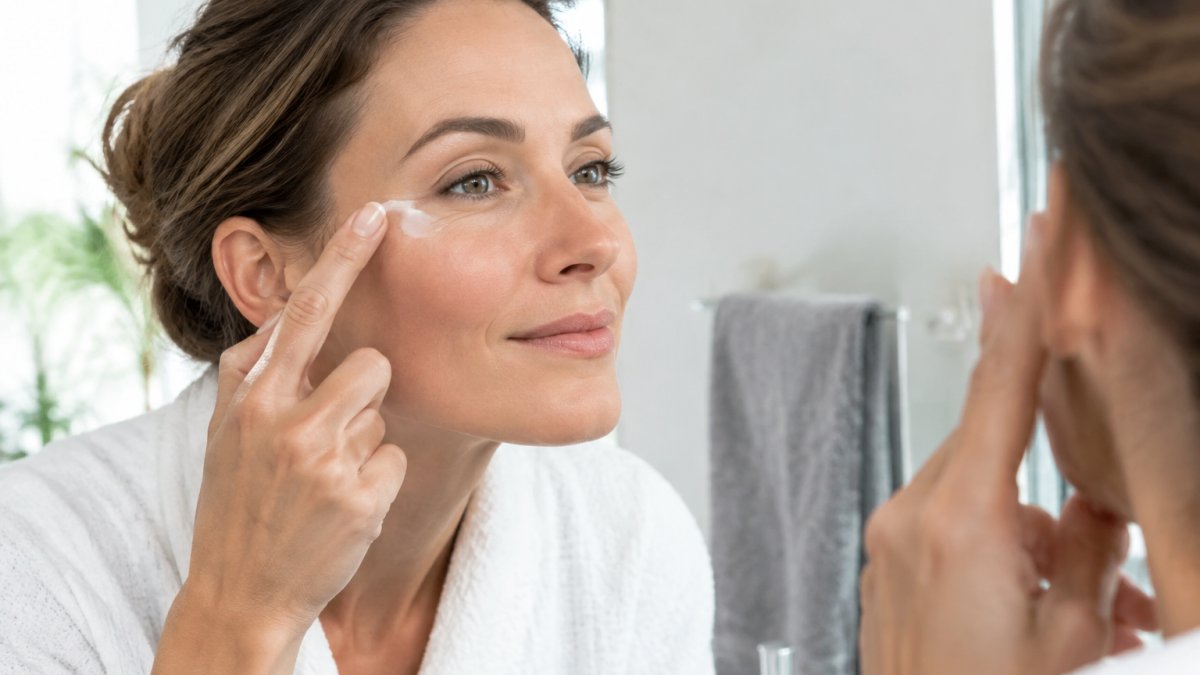
Here is how we do it:
- Cleanse your face and lightly dampen the eye area. Dry skin absorbs a fluid faster than the protective layer can form.
- Place half a pea-sized amount of sunscreen on your ring finger - the ring finger applies the gentlest pressure because it exerts the least force.
- Gently pat it from the inner corner of the eye outward; do not rub. Rubbing moves the product toward the lash line and causes irritation there.
- Cover the eyelid too, keeping the eye closed. The eyelid is the most sun-exposed part of the eye area and the one most often overlooked.
- Allow two to three minutes for it to absorb before applying makeup.
- When outdoors, reapply every two hours - and always after sweating, drying off or washing your face.
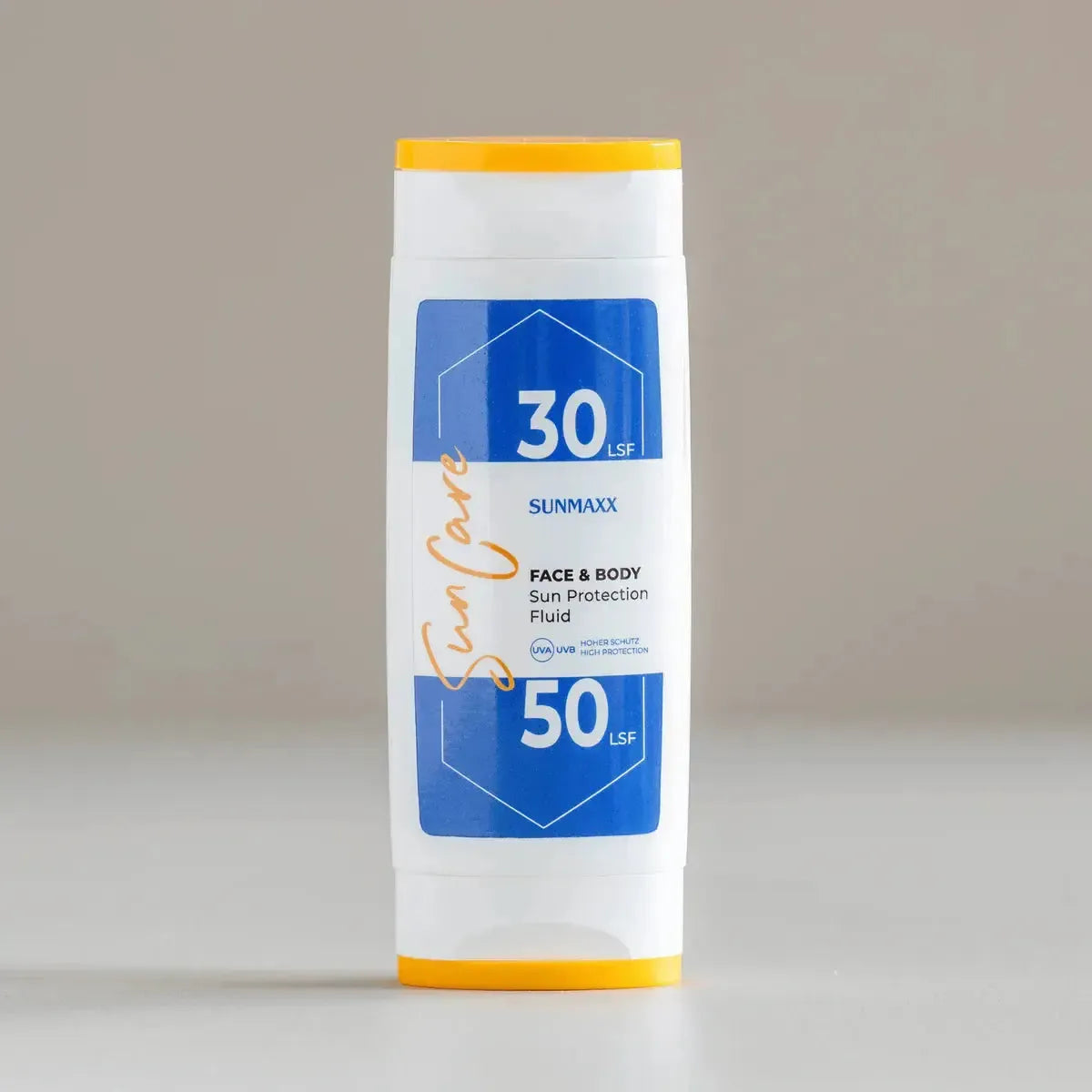
A lightweight sunscreen fluid for face and body is suitable for this step. A fragrance-free, fast-absorbing formula can also be applied around the eyes. Important: do not get too close to the lash line, where even a good product can sting.
Order of application: Cleanse first, then apply a light serum or eye care product, followed by sunscreen as the final skincare step before makeup. If you use a rich eye cream, wait until it has absorbed - otherwise the sunscreen fluid may pill and leave gaps in protection.
Watch out: If you only apply sunscreen in the morning and forget to reapply at midday, you lose protection just when the sun is at its strongest.
Understanding application and reapplication: The sun protection factor on the label is based on a specified amount applied in laboratory tests. In practice, almost no one applies this amount, especially around the eyes. So it is better to use a little more than too little, and to wear sunglasses and seek shade during longer periods outdoors. This helps provide practical protection, even if the cream is applied thinly.
Sunscreen stinging your eyes: Causes and immediate relief
If sunscreen stings your eyes, there may be several causes, such as product on the lash line or sweat in the corner of the eye. Even water-resistant formulations can mix with tears and cause irritation.
Four steps for immediate relief:
- Do not rub - rubbing spreads the irritant further across the conjunctiva.
- Rinse thoroughly with clean, lukewarm water, from the inner corner outward, for about one minute.
- Afterward, apply a gentle, fragrance-free skincare product, not a rich cream containing fragrance.
- Do not use the product around your eyes for the rest of the day; apply it only to the rest of your face.
Watch out: If the stinging lasts more than half an hour, the eyelid swells, redness develops or you feel as though something is in your eye, seek medical advice. This also applies if symptoms do not improve after rinsing or return when the product is reapplied.
To help prevent irritation, use a formula without octocrylene or fragrance, such as our duo fluid. If you wear contact lenses, it is best to apply sunscreen before inserting them and wait until it has absorbed - this helps keep product away from the lash line. If you have dry eyes or known allergies, check the full ingredient list rather than relying solely on a label saying "for sensitive eyes".
Irritation or allergy? Simple irritation causes stinging and settles after rinsing. An allergic reaction often appears only after several hours, with redness, swelling and itching, and can worsen with repeated exposure. If you experience repeated reactions, stop using the product and seek medical help to identify the ingredients responsible, rather than switching between formulations.
Dark spots, dark circles and shadows: What sun protection can do
Dark circles also have other causes: visible blood vessels, fatigue and thin skin. For a closer look, our comparison of the best eye care products for dark circles offers specific product recommendations.
Three skincare products for the sensitive eye area compared
If you want to combine eye care and sun protection, we offer three options. Each product meets a different need, and your choice depends on whether protection or skincare is your priority.
| Product | Price | Focus | Best suited for |
|---|---|---|---|
| suncare face protection fluid SPF 50 | CHF 19.00 | High UV protection, hydration | Daily protection, including on the eyelids |
| Face & Body Sun Protection Fluid SPF 30/50 | CHF 19.90 | Duo with two SPF levels, fragrance-free, water-resistant | On the go, sports, sensitive skin |
| skineffect + vitamin C eye zone fluid | CHF 22.00 | Vitamin C, dark circles, pigmentation | Everyday care and prevention |
Price
The suncare face protection fluid SPF 50 is our first choice for anyone who needs very high protection directly around the eyes. It contains vitamin E, algae extract and watermelon extract and, according to the product description, also helps counter light-induced DNA damage.
The Face & Body Sun Protection Fluid SPF 30/50 is a practical solution for on the go. The duo bottle offers two protection levels and is fragrance-free, vegan and free from octocrylene.
The skineffect + vitamin C eye zone fluid provides the skincare benefits: stabilized vitamin C, vitamins A and E, and an algae-based pre-aging extract. It is suitable for all skin types.
Ideal for: Anyone who needs high daily protection should choose the SPF 50 fluid. May not be necessary if: If you already use a rich eye cream, you may only need a sunscreen fluid over it.
Additional protection: Sunglasses, hats and shade
Sunglasses marked UV-400 protect not only the eyes themselves but also the surrounding skin from scattered light. A wide-brimmed hat keeps the midday sun off the eye area. UV radiation is particularly strong around midday, so seeking shade during this time is a good idea.
If you are thinking long term, do not forget after-sun care. Deep wrinkles around the eyes develop over many years, and our step-by-step guide to treating deep wrinkles around the eyes shows how to counteract them with hydration and regeneration after summer.
The eye area is unforgiving. Starting to protect it from the sun every day is an investment in the most visible part of your face. At Wellmaxx Swiss, you will find fragrance-free sunscreen fluids with broad-spectrum UVA/UVB protection, a vitamin C eye serum and a cooling hyaluronic eye gel that complement one another for a complete routine. Get started with Wellmaxx Swiss and protect your eye area from the first rays of sunshine.
Frequently asked questions
Can you apply sunscreen around the eyes?
Yes, but choose the right texture. The skin around the eyes is thinner and more prone to irritation, so fragrance-free, lightweight fluids are better suited than rich creams. Apply only a small amount to the eyelid and eye contour and allow the product to absorb briefly before applying makeup. If it gets into your eyes, rinse immediately with clean water. A sunscreen with SPF 30 or higher can be considered for the eye area.
Which sunscreen is suitable for sensitive eyes?
For sensitive eyes, fragrance-free, vegan fluids with broad-spectrum UVA/UVB protection are the first choice. Check the full ingredient list when choosing a product. Lightweight textures with vitamin E and glycerin provide moisture without weighing down the eye area. A product with SPF 30 or 50 that is suitable for face and body can be used flexibly. Test new products on a small area around the eye before applying them to the entire area.
Why does sunscreen sometimes sting the eyes?
Stinging usually occurs when sunscreen gets into the eye through sweating, rubbing or applying too much product. Do not apply sunscreen too close to the lash line; focus instead on the eyelid and cheekbone. If your eyes sting, rinse them with clean water, pat dry and stop using the product for the rest of the day.
Is an eye cream with SPF enough?
An eye cream with SPF provides targeted protection for the eye area, but does not replace sunscreen for the entire face. Combine a lightweight eye care product with a facial sunscreen fluid and apply both in the morning. Creams with SPF work well as a base under makeup, while a fluid with SPF 50 provides higher protection on sunny days.


