

News
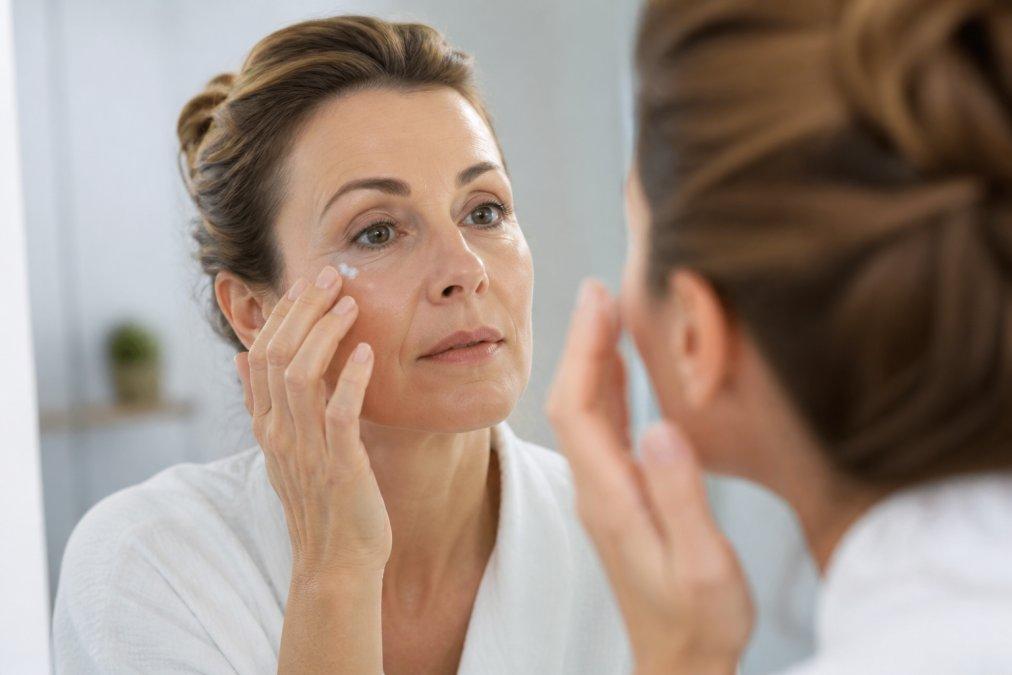

Moisturizing Care for Dehydrated Skin
Moisturizing care for dehydrated skin: identify the causes, distinguish dry from dehydrated skin, and find the right routine.
Learn more
Buy Solarium Care Products in Switzerland: Guide 2026
Buy solarium care products in Switzerland: Discover tanning accelerators, after-sun lotions, and UV protection for a healthy tan. Discover now!
Learn more
Wellmaxx Tested: Anti-Aging Care for 40+
Wellmaxx in the test: Hyaluron⁵ care for mature skin from 40. Effects, products and prices at a glance. Discover now and find the right routine.
Learn more
Best Skincare Products for Skin Regeneration After Tanning Bed Use
Skin regeneration after tanning bed use: Discover the best skincare products for skin regeneration after tanning bed use. From after-sun lotion to collagen booster for.
Learn more
Beste Anti-Aging Cream for 40+: High-Tech Active Ingredients 2026
Anti-aging cream for 40+? Discover high-tech active ingredients, comparisons, and routines for mature skin. Learn more now and find the right skincare!
Learn more
Skincare for Sensitive Skin: The Right Routine
Skincare for sensitive skin: Gentle cleansing, soothing ingredients, and expert tips for a strong skin barrier. Discover your skincare routine now!
Learn more
Best Anti-Aging Cream for 40+: The 8 Best of 2026
Best anti-aging cream over 40 compared: 8 products, active ingredients, prices, and routine. Find your ideal skincare for mature skin. Discover now!
Learn more
Skin care after summer
In this article, you’ll learn exactly what happens to your skin in summer, which active ingredients can actively support regeneration, and what a suitable skincare routine looks like.
Learn more![[product_title]-[product_type]-[product_vendor]](http://wellmaxx-swiss.com/cdn/shop/articles/cellulite-effektiv-behandeln-die-besten-methoden-gegen-orangenhaut.webp?v=1777601378&width=1100)
Cellulite Effectively Treat: The Best Methods Against Orange Peel Skin
Treating cellulite effectively Cellulite affects many women and is often perceived as bothersome orange-peel skin, most visible on thighs and buttocks. But what exactly is cellulite and how does it develop? This article provides a comprehensive overview of the biological causes, the influence of hormones, and the weak connective tissue that promotes cellulite. We also show you the best methods to treat cellulite effectively and improve skin appearance. You'll get valuable tips to visibly reduce dimples and firm your skin. What is cellulite and how does it develop? Definition and appearance Cellulite, commonly called orange-peel skin, describes a visible change in the skin's surface where small dimples and irregularities appear. It typically occurs on the thighs, buttocks, hips, and occasionally the abdomen. The characteristic skin waves are caused by fat cells pushing through the underlying connective tissue, forming small “nodules” that resemble the texture of an orange. Biological development What causes cellulite? The cause is an interplay of enlarged fat cells, weak connective tissue, and reduced blood circulation. The connective tissue on the thighs and buttocks is less firm and elastic in many women – this is referred to as weak connective tissue. As a result, fat cells that accumulate in the subcutaneous layer can more easily push against the upper skin layer. Additionally, the pressure on fine blood vessels leads to poorer microcirculation and a slowed metabolism, which further worsens the skin's appearance. This produces the typical irregularities of cellulite. The role of hormones and genetics in cellulite Hormonal influences and cellulite Cellulite is hormonally caused and closely linked to the female sex hormone estrogen (cellulite estrogen). Estrogen promotes the stretchiness of connective tissue, which is important for pregnancy, but it also affects how fat cells are stored and how well the tissue is perfused. Especially during phases like puberty, pregnancy, or menopause, cellulite can become more pronounced due to estrogen deficiency cellulite. Hormonal fluctuations also promote water retention, which worsens skin appearance. Genetic factors and individual susceptibility Although many hormonal and external factors play a role, predisposition is also important. cellulite genetic predisposition means that some women are more affected due to inherited connective tissue quality, skin structure, or fat distribution. This also explains why some slim women have cellulite while others with higher weight have smooth skin. Weak connective tissue as a decisive factor Connective tissue and its functions Connective tissue connects skin, muscles, and organs and provides stability and elasticity to the skin. In the context of cellulite connective tissue it refers to a weakness or reduced firmness and elasticity precisely in the areas where orange-peel skin appears, especially on the buttocks and thighs. Typical regions and effects Weak connective tissue thighs: Here the network of collagen fibers diminishes, fat cells can enlarge and thus cause dimples. Weak connective tissue buttocks: Similar to the thighs, the skin on the buttocks can lose firmness, which accentuates the appearance of cellulite. The goal of treatment is therefore often to combat connective tissue weakness and strengthen skin structure to improve the appearance of orange-peel skin. What causes cellulite? Other causes and risk factors Fat cells and their role in cellulite Cellulite arises from the combination of fat cells, connective tissue weakness, and hormonal as well as genetic factors. The fat tissue under the skin (cellulite fat) accumulates in fat chambers and can swell, pressing against the connective tissue. This leads to the visible dimpling in the cellulite skin. Other influencing factors Lack of exercise: Reduced circulation promotes the accumulation of fluid and waste products in the tissue. Unhealthy diet: Excessive consumption of sugar, salt, and fat can enlarge fat cells and inhibit metabolism. Smoking and stress: Narrow the blood vessels and negatively affect skin and connective tissue. Hormonal fluctuations: Especially estrogen influences connective tissue structure and can exacerbate cellulite. Genetic predisposition: Predisposition for loose connective tissue or specific fat distribution patterns. Effective methods for treating cellulite Exercise and targeted training Regular physical activity is one of the best measures to reduce cellulite legs and orange-peel skin. Endurance sports like jogging, swimming, or cycling particularly promote circulation and fat loss. Strength training tones the muscles and supports connective tissue, making the skin appear smoother and firmer. For optimal results, a combination of both training types is recommended. Massages and mechanical therapies Massages stimulate circulation, promote lymphatic flow, and can improve the skin's appearance. Methods like dry brushing, lymphatic drainage, or vacuum therapies loosen adhesions in the connective tissue and stimulate metabolic processes. These should be performed regularly to achieve lasting effectiveness. Nutrition and skincare Balanced diet: Rich in vitamin C, silica, and antioxidants strengthens connective tissue and promotes skin elasticity. Sufficient fluid intake: At least two liters of water daily support metabolism and help flush out waste. Topical care: Anti-cellulite creams https://wellmaxx-swiss.com/collections/wellmaxx-shape with ingredients like retinol or caffeine can improve skin texture, especially when combined with massage. When should you consult a dermatologist? Consultation and diagnosis Although cellulite is usually not a health problem, a cellulite dermatologist can provide important information and individualized recommendations. A specialist examination is sensible, especially if there are uncertainties about the causes or if other skin changes occur. Therapeutic options In addition to conservative measures, the dermatologist can recommend professional treatments such as laser therapy, ultrasound treatments, or in severe cases, surgical procedures. These methods aim to reduce fat cells, strengthen connective tissue, or tighten the skin. It's important to have realistic expectations, as many treatments only produce temporary improvements. Cellulite is a complex phenomenon caused by a combination of hormonal, genetic, and mechanical factors. Understanding the causes allows for targeted action against orange-peel skin. Effective treatments include exercise, a healthy diet, massages, and appropriate skincare. For stubborn cellulite, a dermatologist can provide valuable support. Get informed and rely on sustainable strategies to visibly improve your cellulite.
Learn more
Syn®-Ake synthetic peptide - from the venom of the temple viper
The peptides from the lab have the same effect as the highly toxic secretion of the temple viper – a snake that is primarily native to the Southeast Asian region.
Learn more![[product_title]-[product_type]-[product_vendor]](http://wellmaxx-swiss.com/cdn/shop/articles/matrixylr-3000-kollagen-stimulierendes-peptid.webp?v=1777601371&width=1100)
Matrixyl® 3000 – Collagen-stimulating peptide
Matrixyl not only provides a superficial effect but also reactivates the youthful function of the skin at the cellular level.
Learn more![[product_title]-[product_type]-[product_vendor]](http://wellmaxx-swiss.com/cdn/shop/articles/argireliner-ein-botox-ahnliches-peptid.webp?v=1777601374&width=1100)
Argireline® – a Botox-like peptide
Discover how Argireline® – a Botox-like peptide against expression wrinkles – works to pain-relieve and relax facial muscles. This innovative solution could be your secret weapon against wrinkles – for visibly smoother skin, all without injections. Learn more about the benefits and application products!
Learn more