


Last updated: 8 November 2026
At a glance
Moisturizing concentrates are highly concentrated moisturizers with water-binding ingredients that replenish water in the skin and are applied before cream. Your skin's condition is key: for very dry, flaky skin, choose hyaluron⁵ calcium skin optimizer concentrate for CHF 31.50; for tightness without flaking, choose concentrates super hydra boost for CHF 29.00.
- A concentrate does not replace a cream; it prepares the skin for it.
- Humectants bind water, emollients smooth the skin, and occlusives prevent evaporation.
- Apply approximately 0.5 to 1 ml of concentrate to slightly damp skin.
- In dry indoor air, a concentrate applied without a finishing product can draw water from the skin.
- The fragrance-free hyaluron⁵ moist intense gel concentrate for CHF 37.00 is suitable for dehydrated combination skin.
Contents
- What Sets Moisturizing Concentrates Apart from Serums and Creams
- Ingredients for Dry Skin: What Really Binds Moisture
- The Best Moisturizing Concentrates Compared
- Serum for Dry Skin: Which Concentrate Suits Your Skin's Condition
- How to Apply Moisturizing Serum: Order and Frequency
- Sensitive Skin: Check Tolerance and Active Ingredient Concentrations
- Choosing the Right Concentrate for Your Routine
- Frequently Asked Questions
What Sets Moisturizing Concentrates Apart from Serums and Creams
Moisturizing concentrates are highly concentrated moisturizers with a high proportion of water-binding ingredients and a lightweight base. They sit between a serum and a cream: more fluid than a cream, richer in active ingredients than a traditional serum, and without the replenishing oils found in an ointment.
People with dry skin often reach for the thickest cream on the shelf. It's an understandable mistake, but a mistake nonetheless. Dryness occurs on two levels: a lack of water in the upper layers of the skin and a weakened skin barrier that cannot retain that water. A rich cream works mainly on the surface, while a moisturizing concentrate directly replenishes the skin's water reserves.
A simple comparison can help you choose:
| Product format | Main function | Texture | Typical use |
|---|---|---|---|
| Moisturizing concentrate | Replenishes and binds moisture | Lightweight, gel- or fluid-like | After cleansing, before cream |
| Serum | Delivers targeted active ingredients | Very fluid | As an additional step, often in the morning |
| Cream | Locks in moisture and replenishes oils | Rich to firm | As the final step in a routine |
| Face oil | Protects the barrier and softens skin | Oily, a few drops | In the evening, for very dry skin |
| Ointment | Occlusion and protection | Very firm | On specific areas of rough or flaky skin |
The difference lies in their purpose. A concentrate does not replace a cream; it prepares the skin for it. People whose skin feels tight may continue to experience dryness even when using a heavy cream because there is not enough water underneath.
Not sure whether your skin is dry or just dehydrated? The difference determines which products you should choose, and we explain it in detail here: Dehydrated and Dry Skin: The Difference.
Ingredients for Dry Skin: What Really Binds Moisture
Ingredients for dry skin work in three ways: they bind water, smooth the skin's surface or seal it. Most good formulations combine all three, but in different proportions - and those proportions determine whether a concentrate is right for your skin.
Humectants, Emollients and Occlusives Compared
Humectants are water-binding substances. They attract moisture and retain it in the outermost layer of skin. Examples include glycerin, hyaluronic acid, low concentrations of urea and panthenol. Short-chain hyaluronic acid penetrates more deeply, while long-chain hyaluronic acid forms a moist film on the surface; a combination of chain lengths addresses both levels.
Emollients soften the skin. They fill gaps between skin cells and smooth rough, flaky areas. Examples include shea butter, fatty acids and tocopherol.
Occlusives form a film on the skin and prevent moisture from evaporating. This is why a concentrate alone is rarely enough for very dry skin.
A common application mistake is using a humectant-rich concentrate without a finishing product. It then draws water from its surroundings and, in dry indoor air, from the skin itself, making tightness worse. Follow with skincare containing ceramides, niacinamide and lipids, as these strengthen the skin barrier.
The Best Moisturizing Concentrates Compared
The best choice depends on your skin's condition, not the price tag. We've organized our range with that in mind: which concentrate addresses which concern, and what does each application actually cost?
First up is concentrates super hydra boost with a 4-part combination of long-, medium- and short-chain hyaluronic acids, complemented by marine collagen proteins and apple stem cells. It absorbs quickly and is available for CHF 29.00.
The hyaluron⁵ moist intense gel concentrate features 5 types of hyaluronic acid plus a naturally derived hydro system. It is fragrance-free and vegan, with an ultra-lightweight gel texture that absorbs into the skin. Price: CHF 37.00.
The hyaluron⁵ calcium skin optimizer concentrate contains the trace element Calcium PCA, which, according to the product description, stimulates the skin's own production of important barrier components. Price: CHF 31.50.
The hyaluron⁵ day & night fluid concentrate is the choice for anyone who wants to use the same product morning and evening. Silky 24-hour texture, 5 types of hyaluronic acid, winter pea extract for skin circulation, CHF 38.00.
For more advanced routines, there are two specialist options: the skineffect super hyaluron concentrate ampoules with hyaluronic acid and three peptides for expression lines, vegan and designed as a 7-day treatment, CHF 36.50. And the hyaluron⁵ collagen booster serum concentrate with tripeptides that can stimulate the skin's own collagen production, CHF 52.50.
Value for Money and Cost per Application
A concentrate for CHF 52.50 sounds more expensive than one for CHF 29.00. What matters is the price per application.
To reduce the cost per application, combine an affordable concentrate with a rich cream as the final step. The Hyaluron Anti-Aging Set for CHF 107.55 bundles a cream, fluid concentrate, eye gel concentrate and hand cream. It's worth taking a closer look at the product details: concentrates super hydra boost.

Moisturizing Concentrate Prices Compared
Serum for Dry Skin: Which Concentrate Suits Your Skin's Condition
The key is whether the formulation suits your skin's specific condition. The following overview matches different skin conditions with suitable product types.
Decision Matrix by Skin Condition
| Skin condition | Key active ingredients and concentrations | Texture | Finishing product | Typical product choice |
|---|---|---|---|---|
| Very dry skin with flaking | Hyaluronic acid 0.5-2 %, glycerin 5-10 %, ceramides, shea butter | Rich fluid or cream concentrate | Oil-replenishing cream or face oil | hyaluron⁵ calcium skin optimizer concentrate, CHF 31.50 |
| Dry skin that feels tight without flaking | Hyaluronic acid 1-2 %, panthenol 2-5 %, urea 3-5 % | Lightweight gel or fluid | Medium-weight cream | concentrates super hydra boost, CHF 29.00 |
| Dehydrated combination skin | Hyaluronic acid 0.5-1 %, niacinamide 2-5 %, aloe | Gel, fragrance-free, non-comedogenic | Lightweight emulsion | hyaluron⁵ moist intense gel concentrate, CHF 37.00 |
| Dry skin with early fine lines | Hyaluronic acid 1-2 %, peptides 2-5 %, vitamin C 5-10 % | Silky fluid | Cream with lipids | hyaluron⁵ day & night fluid concentrate, CHF 38.00 or skineffect super hyaluron concentrate, CHF 36.50 |
Very Dry Skin with Flaking
This skin needs moisture plus lipids. A tried-and-tested approach is to apply the concentrate to slightly damp skin and follow it after one minute with a cream containing ceramides or shea butter. The hyaluron⁵ calcium skin optimizer concentrate for CHF 31.50 contains Calcium PCA, which, according to the product description, stimulates the skin's own production of barrier components.
Dry Skin That Feels Tight but Is Not Flaky
This is a classic case for a humectant-rich concentrate followed by a finishing product. Glycerin and hyaluronic acid bind water, while panthenol soothes. The concentrates super hydra boost for CHF 29.00 combines long-, medium- and short-chain hyaluronic acids with marine collagen proteins and apple stem cells.
Dehydrated Combination Skin
Lightweight gel concentrates that absorb quickly and are non-comedogenic are a better choice here than rich fluids. The hyaluron⁵ moist intense gel concentrate for CHF 37.00 is fragrance-free and vegan.
Dry Skin with Early Fine Lines
Hyaluronic acid plus peptides to address both moisture and firmness. The hyaluron⁵ day & night fluid concentrate for CHF 38.00 offers a silky 24-hour texture with 5 types of hyaluronic acid and winter pea extract, while the skineffect super hyaluron concentrate ampoules for CHF 36.50 feature hyaluronic acid and three peptides.
The hyaluron⁵ moist intense gel concentrate is fragrance-free and has a gel texture.

One point many guides overlook: moisturizing is not a one-time task. The skin can only store a limited amount of water. Someone who applies a concentrate twice daily when indoor air is dry in winter will feel less benefit than someone who keeps an eye on indoor humidity.
Caution: A humectant-rich concentrate used without a finishing product can draw water from the skin in dry indoor air and make tightness worse. Always follow with a cream or oil.
How to Apply Moisturizing Serum: Order and Frequency
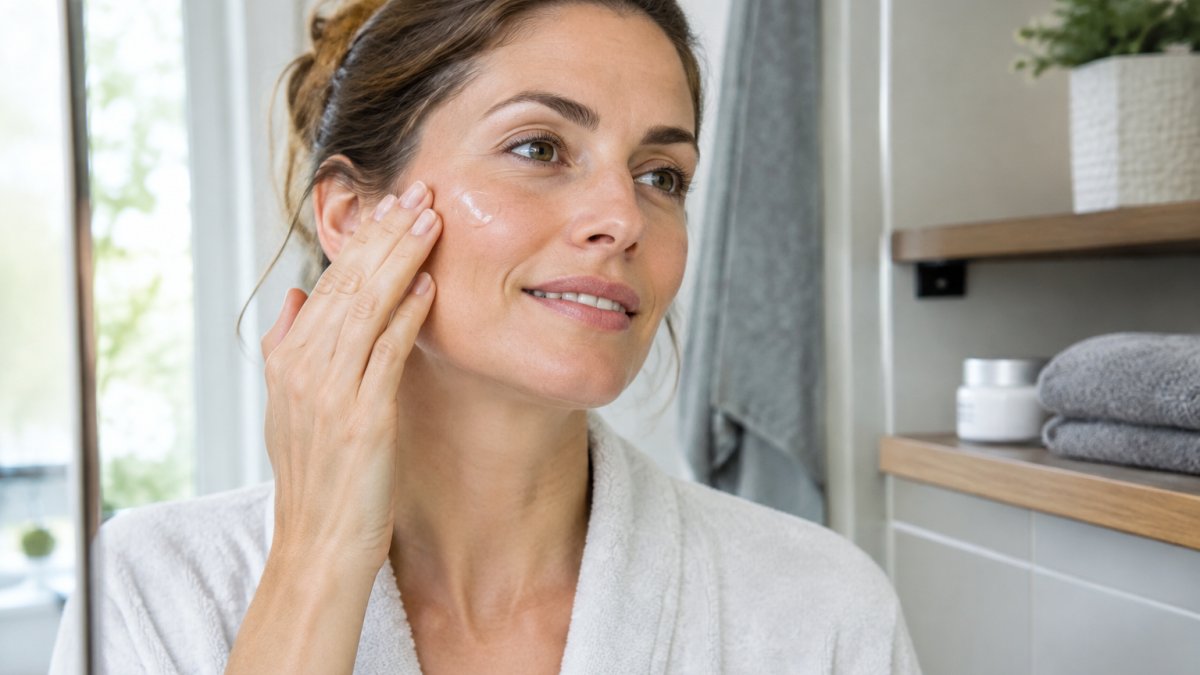
To apply moisturizing serum correctly, use it on cleansed skin before your cream, morning and evening. The order matters. Here's the complete routine - including amounts, frequency and sun protection.
The Complete Routine in Seven Steps
- Cleanse with a mild cleanser that does not dry out the skin. For dry skin, plain water is often enough in the morning, followed by a pH-neutral cleanser in the evening.
- Apply the concentrate to slightly damp skin. External moisture helps humectants bind water. Two pumps are enough for the face and neck - approximately 0.5-1 ml.
- Wait briefly, about one minute, until the product has absorbed. Gel textures often need less time.
- Finish with a cream that locks in moisture. For very dry skin, use a rich cream with ceramides; for combination skin, use a lightweight emulsion.
- Sun protection in the morning: apply a product with SPF 30 or 50 as the final step. This is advisable year-round, including in winter.
- Repeat the routine morning and evening.
- Check weekly whether your skin still feels tight. If so, adjust the amount or finishing product rather than increasing the number of products.
Frequency by Skin Condition
| Skin condition | Morning | Evening | Additional care |
|---|---|---|---|
| Very dry skin | Concentrate + cream + SPF | Concentrate + cream, oil if needed | A thicker layer as a treatment 1-2× per week |
| Dry skin | Concentrate + cream + SPF | Concentrate + cream | An extra layer if needed |
| Dehydrated combination skin | Concentrate + lightweight emulsion + SPF | Concentrate + lightweight emulsion | No extra layer needed |
| Sensitive skin | Concentrate + fragrance-free cream + SPF | Concentrate + fragrance-free cream | Evenings only for the first few days |
Combining Active Ingredients
Hyaluronic acid combines well with niacinamide and panthenol. Using vitamin C and hyaluronic acid in the morning is also possible if your skin does not react. Be careful when using several strong active ingredients in quick succession - this can often overwhelm the skin.
Caution:
Another common application mistake is applying the concentrate to dry skin. The humectants then lack an external source of water and draw it from the skin instead. Lightly dampen your face with a thermal water spray or plain water before applying.
Sensitive Skin: Check Tolerance and Active Ingredient Concentrations
Sensitive skin reacts to concentration, not the active ingredient itself. Hyaluronic acid is well tolerated, but a formulation with many active ingredients at once can cause irritation, even if each one is safe on its own.
Choose fragrance-free formulas and introduce a new concentrate slowly: use it only in the evening for the first few days, then daily. If redness or burning occurs, pause use and check whether it is caused by combining it with other products. We've summarized how to introduce sensitive skin to a new skincare product step by step here: Introducing Sensitive Skin to New Skincare.
If your skin is prone to redness and you're also looking for a rich finishing product, you'll find suitable options in our guide to the best moisturizers for sensitive skin.
Choosing the Right Concentrate for Your Routine
Follow a clear sequence when choosing: identify your skin's condition, check the active ingredients, decide on a finishing product and only then compare prices. This approach makes it less likely that you'll need to buy twice.
The concentrates super hydra boost for CHF 29.00 is a lightweight product that, according to the product description, is suitable for all skin types. The hyaluron⁵ calcium skin optimizer concentrate is an option for Calcium PCA. And for a complete routine from one source, the Hyaluron Anti-Aging Set is the practical choice.
Our concentrates are designed to provide intensive hydration and are made in Germany. Our customers have rated us 4.91 out of 5 stars from 47 reviews. Start with the concentrates super hydra boost and add what your skin actually needs, step by step. Discover it now.
Frequently Asked Questions
Which ingredients provide the most moisture for dry skin?
Humectants such as glycerin, hyaluronic acid and urea are particularly effective at binding moisture. To prevent moisture from escaping again immediately, you also need oil-replenishing lipids such as ceramides, shea butter or fatty acids. A good moisturizing concentrate combines both. For very dry skin, panthenol or niacinamide can also help soothe the skin barrier and improve skin comfort.
What is the difference between a serum and a moisturizer?
A serum or concentrate has a lightweight texture and contains higher concentrations of active ingredients that penetrate deep into the skin. A cream contains more lipids and forms a protective layer that locks in moisture. That's why concentrate is applied after cleansing and before cream. For dry skin, the two formats complement rather than replace each other.
Can you use a moisturizing concentrate every day?
Yes, most moisturizing concentrates are suitable for daily use, morning and evening. Start with one application per day to test tolerance. Peptide ampoule treatments are better suited to a 7-day course or a targeted boost of freshness. For sensitive skin, choose fragrance-free, low-irritation formulations and gradually increase how often you use them.
In what order should you apply serum and moisturizer?
The order is: cleanse, then apply the moisturizing concentrate or serum, let it absorb briefly and follow with moisturizer. The cream locks in moisture and strengthens the skin barrier. If you also use sunscreen in the morning, apply it as the final step. This keeps skin soft and protected from drying out throughout the day.


