


Table of contents
- Visible results from anti-aging skincare: What really matters
- How long does anti-aging skincare take to work? A realistic timeline
- Anti-aging routine for mature skin: Building it in four steps
- How to use retinol correctly: dosage, getting started and tolerance
- Hyaluronic acid facial skincare: Hydration you can see
- Compatible ingredient combinations and application steps
- Measurable before-and-after criteria: How to spot progress
- Side effects, when to stop and the limits of cosmetic skincare
- Frequently asked questions
Last updated: October 18, 2026
Visible results from anti-aging skincare: What really matters
Visible results from anti-aging skincare don't come from a single miracle product, but from three things working together: the right active ingredients, consistent use and patience over several weeks. That's exactly where this Wellmaxx Swiss guide comes in. We'll show you how to build an anti-aging skincare routine so you can actually see and assess changes.
The most important point first: Anti-aging skincare combines cleansing, active ingredients, hydration and sun protection. If one element is missing, results won't follow. That's why many people stop after four weeks, disappointed.
The good news: If you follow the right order and dosage, you'll usually see a difference in skin texture and fine lines after 8 to 12 weeks. We'll explain how to measure that below.
How long does anti-aging skincare take to work? A realistic timeline
There's no single answer to when you'll see results. Three factors matter: the active ingredient, your skin goal and how consistently you use it. Considering each factor separately helps you assess progress realistically and avoid disappointment.
Why skin needs time: the renewal cycle sets the pace
The outermost layer of skin renews itself approximately every 28 days. As we age, this process slows down, often taking 35 to 40 days. Cosmetic skincare can support this cycle but cannot speed it up. That's why quick-fix claims should be treated with caution: Changes visible after a few days are usually due to hydration or a glow effect, not structural change.
Ingredient-specific timelines: what to realistically expect and when
Not all active ingredients work at the same speed. The overview below summarizes the timelines you can expect, provided you use the products consistently and your skin doesn't become irritated.
- Hydration (hyaluronic acid, glycerin): noticeable to the touch after a few days, visible after 1 to 2 weeks. Skin looks plumper and fine lines appear smoother because water is retained in the outer layer.
- Glow and evenness (vitamin C, niacinamide): initial brightening after 2 to 4 weeks, with more noticeable effects after 8 to 12 weeks. Antioxidants neutralize free radicals and inhibit melanin production - and that takes time.
- Fine lines (retinol, peptides): initial softening after 4 to 6 weeks, with more visible results after 8 to 12 weeks. Retinol promotes cell renewal and collagen production; peptides support the skin barrier and elasticity.
- Elasticity and firming (peptides, bakuchiol): after 8 to 12 weeks, often only after 12 weeks or longer. Structural changes in the dermis require several renewal cycles.
- Dark spots (vitamin C, retinol, sunscreen): after 12 weeks or longer. Without consistent sun protection, any brightening is doomed to fail.
The difference between short-term effects and long-term improvement
Many people mistake the immediate effect of hydration for genuine skin improvement. A hyaluronic acid serum makes skin look plumper within minutes - an instant cosmetic effect that disappears after washing. Long-term results come only from consistently supporting skin renewal. Understanding this helps you stick with your routine beyond three weeks, until the cycle makes the effects visible.
Consistency beats intensity
Taking two weeks off can set your progress back almost to zero. Skin adjusts to active ingredients, but it also forgets them quickly. Consistent, gentle use is more effective than an aggressive treatment with breaks. If your skin becomes irritated, it's better to reduce the frequency than to stop using the product altogether.
Realistic expectations as the foundation for visible results
Knowing that hydration works quickly while wrinkles take weeks makes it easier to assess progress. The timeline isn't an obstacle, but a tool: It helps you choose the right active ingredient for your skin goal and find the patience you need. In the next section, we'll show you how to build a routine that makes the most of this timeline.
Anti-aging routine for mature skin: Building it in four steps
An anti-aging routine for mature skin follows four steps: cleanse, apply an active ingredient, moisturize and protect against UV rays. The order affects how well the active ingredients are absorbed.
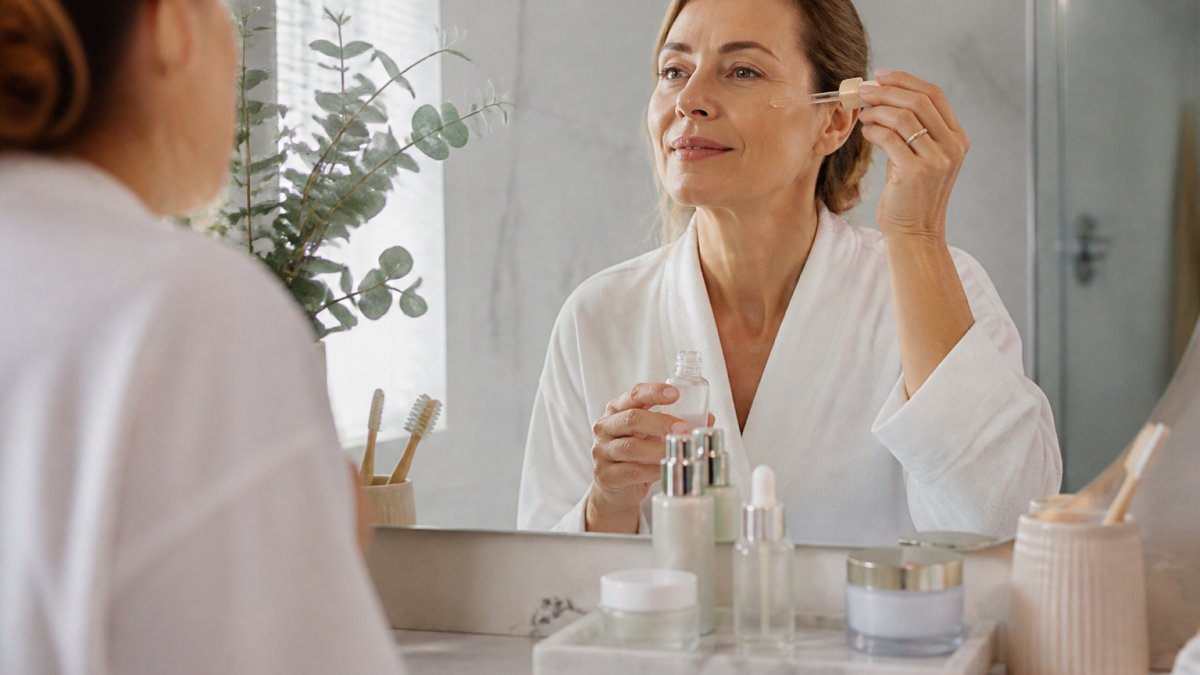
Cleansing, active ingredient, moisturizer, sunscreen
- Cleansing: morning and evening, gentle and alcohol-free
- Active ingredient: apply a thin layer to dry skin, targeting specific areas
- Moisturizer: locks in the active ingredient
- Sunscreen: the final step in the morning, year-round
For the active ingredient step, we recommend a concentrate rather than a heavy cream. Our Hyaluron⁵ Collagen Booster Serum Concentrate combines a fivefold hyaluronic acid formula with tripeptides and pairs well with moisturizer.

Skin type, sensitivity and individual adjustments
Sensitive skin needs a slower introduction. Test new active ingredients on a small area first and increase use gradually over two weeks. For dry skin, focus on retaining moisture; for oily skin, choose lightweight textures.
How to use retinol correctly: dosage, getting started and tolerance
Retinol works when introduced gradually: Start twice a week, then use it every two to three days, and only move to daily use later. Starting too quickly risks redness and irritation.
How to use it:
- In the evening after cleansing, on dry skin
- A pea-sized amount for the entire face
- Apply moisturizer on top
- Use sunscreen consistently during the day
For sensitive skin, bakuchiol is a gentler alternative. It requires less adjustment time but also helps support skin renewal.
Hyaluronic acid facial skincare: Hydration you can see
Hyaluronic acid facial skincare binds water in the outer layer of skin, making it look plumper. The effect is quickly visible, but lasts only with regular use.
Moisture retention is the foundation of any anti-aging skincare routine. Without it, wrinkles look deeper and skin texture appears rougher. Different sizes of hyaluronic acid molecules in a product reach different layers of skin. That's exactly what our serums are designed to do.
How to use: Apply to slightly damp skin, then follow with a cream. This locks in moisture.
hyaluron⁵ collagen booster serum concentrate →
Compatible ingredient combinations and application steps
Not every active ingredient works well with every other one. These combinations have proven effective:
| Combination | When to use | Suitable for |
|---|---|---|
| Hyaluronic acid + peptides | morning and evening | all skin types |
| Vitamin C + sunscreen | morning | dull skin |
| Retinol + moisturizer | evening | mature skin |
| Bakuchiol + antioxidants | evening | sensitive skin |
The order always stays the same: thinner products before thicker ones. Serum first, then cream.
For the evening, we recommend our Cellular Lift Age Defense Line Release Serum, which uses peptide technology to support vital skin functions and regeneration.

Measurable before-and-after criteria: How to spot progress
Progress with anti-aging skincare is often subtle. Without a systematic approach, genuine improvements can be obscured by daily fluctuations, lighting and perception. Deciding in advance what to look for and how to compare results helps you assess changes more objectively - and recognize when a product really isn't working.
A standardized approach: Photos, lighting and timing
The most important step is standardization. Before the first application, decide on:
- Camera and distance: always use the same camera (a smartphone is sufficient) and the same distance from the mirror or tripod.
- Lighting: indirect daylight by a window, no direct sunlight or artificial lighting with a color cast.
- Time of day: in the morning after cleansing, before applying skincare products.
- Facial expression: a neutral expression, relaxed muscles and the same head position.
- Background: a plain wall, with no distractions.
One photo per month is enough. Comparing photos reveals more than looking in the mirror every day because the brain barely registers gradual changes.
Simple skin characteristics you can assess
Not every change is measurable, but many can be observed. Look at these five criteria and rate each on a scale from 1 (unchanged) to 5 (significantly improved):
- Wrinkle depth: same expression, same position. Compare forehead lines and nasolabial folds in particular.
- Skin texture: smoother or rougher than before? Run a fingertip over your cheeks.
- Elasticity: skin springs back after being gently pulled. Test on your cheek, not on sensitive areas.
- Evenness: age spots, redness and uneven patches. Count visible spots in a photo.
- Glow: radiant skin rather than a dull complexion. Assess the natural highlights on your cheekbones.
Recognizing and avoiding perception bias
Your daily look in the mirror is a poor judge of progress. The brain gets used to your own image and barely notices changes. Daily fluctuations, sleep, diet and your cycle also play a role. A standardized monthly comparison reduces these factors. If you're unsure, ask someone else to compare the photos - without knowing which one is older.
When a product really isn't working
Not every skincare product works for everyone. If none of the five criteria shows improvement after 12 weeks of consistent use, it makes sense to switch active ingredients or rethink your routine. That's not a failure, but an informed decision based on observation rather than a feeling.
Measurement as the foundation for visible results
Visible results don't happen by chance. They come from combining the right active ingredients, consistent use and objective assessment. Measuring your progress helps you make adjustments in time and stay motivated - because you can see that patience pays off.
Side effects, when to stop and the limits of cosmetic skincare
Redness, burning or tightness are warning signs. If they occur, stop using the active ingredient for a few days, then restart at half the frequency.
Cosmetic skincare softens signs of skin aging. It is not a substitute for medical treatment. For persistent reactions or sudden skin changes, consult a dermatologist.
The timeline is where most people give up: visible results from anti-aging skincare take weeks, not days. Wellmaxx Swiss combines scientifically tested high-tech active ingredients with over 9 years of beauty expertise to help you build your routine correctly from the start. With the Hyaluron⁵ Collagen Booster Serum Concentrate, Cellular Lift Age Defense Line Release Serum and concentrates total lift boost, you get three complementary building blocks. Discover them now and put your routine on a measurable foundation.
Frequently asked questions
How long does it take to see visible results from anti-aging skincare?
Hyaluronic acid moisturizers often make skin look smoother after just a few days because the outermost layer retains water. Active ingredients that stimulate cell renewal take longer: With retinol or peptides, initial changes in fine lines can usually be expected after 8 to 12 weeks of regular use. Deep wrinkles and skin elasticity respond even more slowly. The key is to use your anti-aging skincare daily for months rather than stopping after two weeks.
How can you tell if anti-aging skincare is working?
Compare photos taken in the same light rather than relying on the mirror. Look for specific signs: Does your skin feel more elastic after application, are fine lines around your eyes less pronounced, and does your complexion look more even? A simple test is to check how skin springs back: Gently lift the skin on the back of your hand and watch how quickly it returns. Taking a photo every four weeks makes changes in skin texture much easier to spot than in day-to-day life.
Can you combine multiple anti-aging active ingredients?
Yes, but use them in the right order and with care. Hyaluronic acid and vitamin C work well together in the morning, while retinol should be applied in the evening. Don't combine retinol and vitamin C in the same application; use vitamin C in the morning and retinol in the evening. If you have sensitive skin, start with one active ingredient and add the second only after two to three weeks. Layer from thinnest to thickest: serum first, then cream, and sunscreen last.
How often should you use anti-aging products?
Hyaluronic acid, moisturizers and sunscreen are suitable for daily use, morning and evening. Start retinol two evenings per week and slowly increase to three or four once your skin no longer feels tight or flakes. Most skin types tolerate highly concentrated peptide serums daily. Consistency matters more than quantity: An anti-aging routine for mature skin works through repetition, not a single intensive application.


