

Table of Contents
- Scientifically proven anti-aging ingredients: How they fight skin aging
- Retinol and vitamin A derivatives: Effects on the skin
- How to use hyaluronic acid on the face: Moisture retention and skin firming
- Peptides and collagen stimulation: The role of synthetic ingredients
- Vitamin C, antioxidants, and their protective function
- Effective anti-aging routine after 50: Ingredient combinations and how to use them
- Ingredient interactions and recommendations for specific skin types
- Conclusion: Sustainable skincare with evidence-based ingredients
- Frequently Asked Questions
Last updated: October 2, 2026
Scientifically proven anti-aging ingredients: How they fight skin aging
Visible signs of skin aging are caused by collagen loss, oxidative stress, and slower cell renewal. Wellmaxx Swiss specializes in developing anti-aging active ingredients that target these processes and deliver proven results. This guide shows you which ingredients really work, how they interact, and how to incorporate them into your daily routine.
Skin over 50 needs a different approach than younger skin. It is not about using more products, but about choosing the right ingredients at the right concentrations.
Retinol and vitamin A derivatives: Effects on the skin
Retinol is the gold standard among anti-aging ingredients. It speeds up cell renewal and stimulates collagen synthesis, making wrinkles less visible and refining skin texture.
The challenge is tolerability. Retinol can cause redness, flaking, and irritation. That's why it comes in several forms: retinol (effective but irritating), retinaldehyde (stronger and faster-acting), retinyl palmitate (gentler and weaker), and retinoic acid (the most active form, available by prescription).
Retinol speeds up cell renewal by about two weeks. Start with a low concentration (0.25-0.5 %) and increase it gradually. Two to three times a week is enough to start with.
How to use hyaluronic acid on the face: Moisture retention and skin firming
Hyaluronic acid binds water in the skin, up to 1,000 times its own weight. The result: Skin looks plumper, fine lines are softened, and the skin barrier is strengthened.
Hyaluronic acid only works if your skin has enough moisture. Apply it to damp skin, then seal it in with a cream. There are different molecular sizes: high molecular weight (plumps the surface), medium molecular weight (partially penetrates the skin), and low molecular weight (works deep down).
Wellmaxx Swiss uses a 5-fold hyaluronic acid formula with different molecular sizes. The hyaluron⁵ moist intense gel concentrate (CHF 37.00) combines these approaches for maximum moisture retention. Its ultra-light gel texture absorbs quickly and leaves skin looking plumper.
Peptides and collagen stimulation: The role of synthetic ingredients
Peptides are short chains of amino acids that your skin interprets as a signal: "We need more collagen." Your skin responds by actually increasing collagen production. Peptides are stable, well tolerated, and also work well on sensitive skin.
SYN®-AKE is a synthetic peptide developed based on snake venom. It relaxes the facial muscles and reduces expression lines. Wellmaxx Swiss's concentrates total lift boost (CHF 29.00) contains SYN®-AKE together with 3-fold hyaluronic acid for instant plumping and longer-term skin firming.

Easyliance is a polypeptide that provides an immediate, noticeable firming effect and reduces expression lines. The concentrates anti wrinkle boost (CHF 29.00) uses this ingredient with added hibiscus extract for antioxidant support.
Vitamin C, antioxidants, and their protective function
Vitamin C (L-ascorbic acid) neutralizes free radicals caused by UV radiation and environmental pollution. It helps prevent skin aging, dark spots, and inflammation. Studies show that regular use of stabilized vitamin C can improve skin elasticity and lighten dark spots.
The stability problem: Why many vitamin C products don't work
L-ascorbic acid oxidizes when exposed to air, light, and water. A product can lose 50 % of its effectiveness after just a few weeks.
L-ascorbic acid (pure form):
- Highest biological activity; requires a pH below 3.5
- Must be stored in an airtight, light-resistant container
- Shelf life: 3-6 months after opening
- Effective concentration: 10-20 %
- Best penetration, but most irritating
Vitamin C derivatives (stabilized forms):
- Ascorbyl Glucoside: Stable, but less effective
- Magnesium Ascorbyl Phosphate: Water-soluble, more stable, weaker effect
- Tetrahexyldecyl Ascorbate: Oil-soluble, good penetration, more stable
- 3-O Ethyl Ascorbic Acid: Very stable, good penetration, similar effectiveness to L-ascorbic acid
L-ascorbic acid shows results after 4-6 weeks. Derivatives take 8-12 weeks because the skin first has to convert them.
Stabilization techniques for maximum effectiveness
Top formulas combine several stabilization methods: low pH (2.5-3.5), antioxidant ingredients such as vitamin E and ferulic acid (increase effectiveness by up to 30 %), airtight packaging, light protection, and water-free or low-water formulas.
How to use it for maximum results
Vitamin C works best in the morning, before sunscreen. It boosts the effectiveness of SPF and provides additional protection against photoaging.
hyaluron⁵ collagen booster serum concentrate →
Synergistic antioxidants
- Vitamin E (tocopherol): Works synergistically with vitamin C, increasing protection by about 40 %.
- Ferulic acid: Stabilizes vitamin C and increases its effectiveness by up to 30 %. The combination of vitamin C + vitamin E + ferulic acid is the clinical gold standard.
- Resveratrol: Anti-inflammatory and antioxidant; works through different biological pathways than vitamin C.
- Niacinamide (vitamin B3): Strengthens the skin barrier and reduces inflammation, indirectly supporting the effects of vitamin C.
Effective anti-aging routine after 50: Ingredient combinations and how to use them
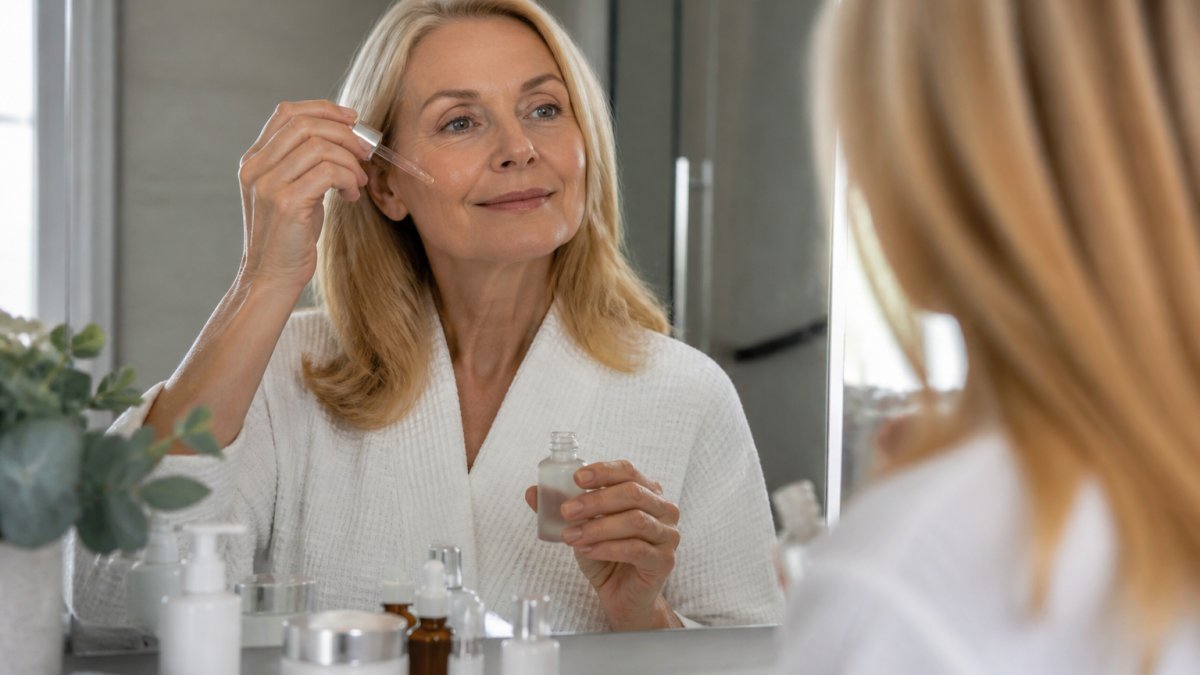
Morning routine:
- Gentle cleanser
- Vitamin C serum (10-20 % L-ascorbic acid)
- Hyaluronic acid concentrate on damp skin
- Light moisturizer
- Sunscreen (at least SPF 30)
Evening routine:
- Thorough cleanse
- Retinol or peptide concentrate
- Hyaluronic acid concentrate
- Richer night cream
Ingredient interactions and recommendations for specific skin types
Not all ingredients work well together. Some enhance each other's effects, while others neutralize each other or cause irritation.
Compatible combinations and synergies
Problematic combinations and why they don't work
The layering system: A practical order for maximum effectiveness
Morning routine (protection and hydration):
- Gentle cleanser (pH-neutral)
- Toner or essence (optional)
- Vitamin C serum (pH 2.5-3.5), wait: 10-15 minutes
- Hyaluronic acid concentrate on damp skin
- Light moisturizer
- Sunscreen (at least SPF 30), wait: 5 minutes
Evening routine (repair and collagen stimulation):
- Thorough cleanse
- Toner (optional)
- Retinol or peptide concentrate, wait: 20 minutes
- Hyaluronic acid concentrate
- Richer night cream
Wait times between layers
- Vitamin C: 10-15 minutes
- Retinol: 20 minutes
- Hyaluronic acid: 2-3 minutes
- Peptides: 5 minutes
- Niacinamide: 2-3 minutes
Recommendations for specific skin types
Adjust concentration to your skin type
- Dry/sensitive skin: Lower concentrations (retinol 0.25-0.5 %, vitamin C 10 %)
- Normal skin: Medium concentrations (retinol 0.5-1 %, vitamin C 15 %)
- Oily/resilient skin: Higher concentrations (retinol 1-2 %, vitamin C 20 %)
Conclusion: Sustainable skincare with evidence-based ingredients
Scientifically proven anti-aging active ingredients deliver reliable results. Retinol stimulates cell renewal. Hyaluronic acid binds water. Peptides signal collagen production. Vitamin C protects against oxidative stress. These effects are documented and reproducible.
Frequently Asked Questions
Which anti-aging ingredients have the strongest scientific evidence?
Retinol, hyaluronic acid, vitamin C, and peptides are considered the most extensively researched anti-aging ingredients. Retinol stimulates cell renewal and collagen synthesis, while hyaluronic acid supports moisture retention in the epidermis. Vitamin C acts as an antioxidant against free radicals, and peptides such as SYN®-AKE relax the facial muscles to visibly reduce expression lines. Clinical studies show that regular use of these ingredients improves skin texture and elasticity.
How does retinol work on the skin, and at what age should you start using it?
Retinol stimulates cell renewal and promotes collagen synthesis in the dermis, resulting in firmer, smoother skin. It reduces dark spots and softens fine lines by increasing cell proliferation. Retinol can be used preventively from your mid-30s; after 50, it is a cornerstone of an effective anti-aging routine. Start with a low concentration and increase it gradually to build tolerance. Use retinol in the evening and pair it with moisturizer, as it can dry out the skin barrier.
How long does it take to see the first results from anti-aging ingredients?
Most evidence-based ingredients show initial improvements after 4-6 weeks of regular use. Hyaluronic acid works faster, providing instant plumping and firming. Retinol takes 8-12 weeks to visibly improve skin texture because it gradually stimulates cell renewal. Peptides and vitamin C show results after 6-8 weeks. Consistency is key: daily use delivers better results than occasional use.
Can I combine different anti-aging ingredients, or will they interact?
Many ingredients can be combined effectively, but some require caution. Retinol and vitamin C can both be used, but should be applied at different times of day, as both can irritate the skin. Hyaluronic acid can be combined with all other ingredients without any problems and boosts their moisturizing effects. Peptides and hyaluronic acid make a particularly effective combination for collagen stimulation and skin firming. Avoid using multiple irritating ingredients, such as retinol, AHAs, and vitamin C, on the same evening.
Are plant-based anti-aging ingredients as effective as synthetic ones?
Plant-based ingredients such as phytoestrogens and hibiscus extract provide antioxidants and vitamins, but they do not support cell renewal like retinol or collagen stimulation like peptides. They make excellent complementary ingredients but cannot replace the key active ingredients. Synthetic peptides such as SYN®-AKE and highly concentrated hyaluronic acids have proven concentrations and bioavailability that plant-based alternatives rarely achieve. The best strategy combines both: evidence-based high-tech ingredients as a foundation and plant extracts as supporting ingredients.
What should I look for when buying anti-aging skincare?
Pay attention to the active ingredient concentration and bioavailability - highly concentrated formulas work better than diluted ones. Look for Dermatest certifications and clinical studies that prove effectiveness. Consider your skin type: sensitive skin needs gentler formulas, while normal to oily skin can tolerate higher concentrations. Avoid products that make empty promises without scientific evidence. High-quality products like the Wellmaxx range combine several active ingredients at sufficient concentrations for measurable results.
Can I keep my current skincare routine and just add individual anti-aging ingredients?
Yes, you can, as long as you take it step by step. Start with an active ingredient concentrate such as hyaluronic acid or a mild retinol and monitor your skin's reaction for 2-3 weeks. If your skin responds well, you can add more ingredients. Be careful not to introduce too many potent ingredients at once, as this can cause irritation. Highly concentrated products such as Wellmaxx Anti-Wrinkle Boost are easy to add to existing routines and enhance their effects without requiring a complete change.
The right skincare after 50 isn't a matter of luck, but of knowledge. Wellmaxx Swiss has brought together the ingredients that are proven to work - highly concentrated, scientifically tested, and combined in formulas that truly transform your skin. Discover now and see how targeted ingredient combinations revitalize your complexion.


