

Contents
- High-tech active ingredients in cosmetics: What's really behind them
- Hyaluronic acid in cosmetics: From hydration to deeper effects
- Encapsulated active ingredients: Why microspheres change penetration
- Comparing peptides, plant extracts and nano-biotechnology
- Active ingredients for mature skin: What really works after 40
- Checking cosmetic ingredients: How to recognise credible formulations
- Conclusion: Using high-tech active ingredients correctly
- Frequently asked questions
Last updated: 13 October 2026
High-tech active ingredients in cosmetics: What's really behind them
High-tech active ingredients in cosmetics are highly concentrated, scientifically developed molecules that target specific skin processes. At Wellmaxx Swiss, we combine these ingredients with tested formulas because their effects depend not on their marketing names, but on three measurable factors: the active ingredient, formulation and concentration.
Many guides promote ingredient names as the solution. That's an oversimplification. A peptide in the wrong carrier formula simply won't reach the skin.
Below, we show you how to assess high-tech active ingredients in cosmetics realistically and explore the different classes.
Active ingredients, formulation and concentration: the three levels
An active ingredient only works when all three levels are aligned. The raw ingredient provides the biological function, the formulation determines stability and delivery, and the concentration determines whether the skin responds at all.
For example, a high concentration of hyaluronic acid is of little use if the molecule is too large to reach the upper layers of the skin.
For you as a user, this means checking not only whether an active ingredient appears on the packaging, but also its form and what it is combined with.
Hyaluronic acid in cosmetics: From hydration to deeper effects
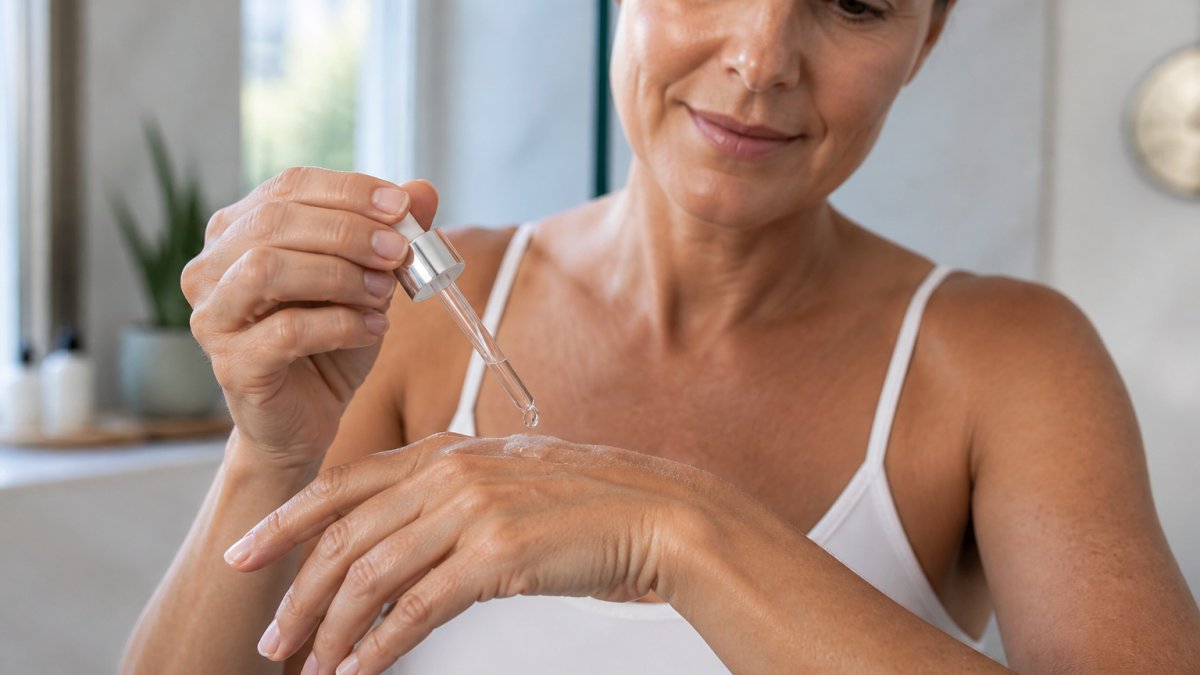
Hyaluronic acid is a substance naturally found in the body that binds water and plumps the skin. It is one of the most extensively studied moisturising ingredients in cosmetics. What matters is not the amount, but the molecular size.
Molecular size determines the effect
Short-chain hyaluronic acid penetrates deeper layers and supports hydration there. Long-chain variants remain on the surface and visibly smooth the skin. That's why modern serums use several chain lengths at once.
Our hyaluron⁵ collagen booster serum concentrate combines a fivefold hyaluronic acid formula with tripeptides that can stimulate the skin's own collagen production. The lightweight texture absorbs without feeling sticky.

Encapsulated active ingredients: Why microspheres change penetration
Encapsulated active ingredients are enclosed in microspheres or liposomes that release the ingredient only once it reaches the skin.
The advantage is clear: encapsulation keeps them stable until application. Release can also be delayed, supplying the skin over several hours rather than all at once.
What many guides don't mention: encapsulation is not an end in itself. If the shell is too thick, it releases the ingredient too slowly. If it's too thin, it offers no protection.
Comparing peptides, plant extracts and nano-biotechnology
Each class of active ingredient has different applications, a different mechanism of action and a different level of evidence. To assess high-tech active ingredients in cosmetics realistically, you need to consider these three aspects separately: What does the ingredient do biochemically, how well supported is its effect, and where does the technology reach its limits?
| Active ingredient class | Mechanism of action | Typical molecular or particle size | Evidence | Main limitation |
|---|---|---|---|---|
| Peptides | Signalling to fibroblasts, inhibition of neurotransmitters | approx. 300-1500 Dalton | In vitro and smaller clinical studies, depending on the manufacturer | Requires a suitable carrier formula and sufficient concentration |
| Plant extracts | Antioxidant, anti-inflammatory, soothing | Varies widely, often several hundred Dalton | Well documented in traditional use; standardised extracts have stronger evidence | Variable raw material quality, few standardised markers for active compounds |
| Hyaluronic acid | Water binding, plumping, volume | 5 kDa to over 2000 kDa depending on chain length | Very well studied, considered a benchmark humectant | Molecular size determines penetration depth |
| Encapsulated active ingredients | Protection and timed release | Liposomes approx. 50-200 nm, microspheres larger | Strong evidence for stability, less for added clinical benefit | More complex formulation; release kinetics are critical |
| Nano-biotechnology | Deeper delivery, reservoir effect | under 100 nm | Technically plausible, limited long-term data | Tolerability and labelling requirements |
Peptides: Signalling agents with clear but limited evidence
Peptides are short chains of amino acids that act as messengers. There are essentially three families:
- Signal peptides such as Matrixyl (palmitoyl pentapeptide-4) encourage fibroblasts to produce more collagen. The effect is well documented in in vitro models; clinical studies generally show a more moderate but measurable improvement in skin firmness over several weeks.
- Neurotransmitter-inhibiting peptides such as acetyl hexapeptide-8 or SYN®-AKE are modelled on snake venom proteins and relax facial expression muscles. The effect is visible but considerably weaker than injections and requires consistent use.
- Carrier peptides such as copper tripeptide-1 deliver trace elements into the skin and support repair processes.
A practical point: peptides are sensitive. They need a suitable pH, protection from strong acids and a formulation that delivers them into the epidermis.
Plant extracts: Widely supported by evidence, but difficult to standardise
Plant extracts provide antioxidants, soothing polyphenols and anti-inflammatory compounds. Well-known examples include green tea extract (EGCG), liquorice root (glabridin), Centella asiatica (madecassoside) and sweet almond extract.
The advantage: many of these substances have been documented in traditional and dermatological use for decades. The disadvantage: active compound concentrations vary considerably depending on the harvest, extraction method and origin.
For sensitive skin, extracts are often gentler and have broader effects, but they also work more slowly.
Nano-biotechnology: Opportunities and clear limitations
Nanoparticles are less than 100 nanometres in size and can transport active ingredients deeper into the skin or release them from a reservoir. The opportunities: better penetration, protection for sensitive molecules and more even release.
The limitations are just as real:
- The smaller a particle, the harder it is to predict its tolerability.
- Not every active ingredient benefits from nano-delivery; some lose their stability in the process.
- In the EU and Switzerland, labelling and safety requirements apply to nanomaterials in cosmetics. Consumer information on cosmetics and nanomaterials can help clarify what must be declared.
If you have sensitive skin, test nano-formulations on a small area first and monitor the reaction over several days.
Biomimetic peptides and signalling proteins
Biomimetic peptides are molecules modelled on the body's own signalling substances. In effect, they tell the skin to produce more collagen. Signalling proteins work on the same principle.
A well-known example is SYN®-AKE, a synthetic peptide modelled on temple viper venom. It relaxes facial muscles and visibly softens expression lines. Our concentrates total lift boost combines this active ingredient with triple hyaluronic acid and sweet almond extract.

Nano-biotechnology and nanoparticles: Opportunities and risks
Nanoparticles are particles measuring a few nanometres that can deliver active ingredients deeper into the skin. The opportunities: better penetration and a reservoir effect. The risk: the smaller a particle, the harder it is to predict its tolerability.
hyaluron⁵ collagen booster serum concentrate →
If you have sensitive skin, check the ingredient list of nano-formulations carefully and test new products on a small area. Consumer information on cosmetics and nanomaterials can help clarify what must and does not need to be labelled.
Active ingredients for mature skin: What really works after 40
After 40, skin structure changes measurably: collagen and elastin decrease, the barrier becomes more permeable and the skin retains less moisture.
Proven combinations include peptides for firmness, multiple forms of hyaluronic acid for hydration and antioxidants to protect against environmental stressors. Our collagen skinbooster serum concentrate combines Hydro Marines Collagen from marine algae with fourfold hyaluronic acid.
A question our customers often ask: can a cream still help with deep wrinkles? The honest answer: cosmetics can soften their appearance and improve elasticity, but they cannot replace medical treatment.
Checking cosmetic ingredients: How to recognise credible formulations
Check three things: the active ingredient's position on the ingredient list, the stated concentration and the packaging. The higher an ingredient's proportion, the closer to the front of the INCI list it appears.
Packaging is a second indicator. Ingredients sensitive to light and air, such as vitamin C, belong in opaque pump dispensers, not open jars. Third, reputable brands disclose their tests and certifications.
Active ingredient combinations and potential conflicts
Not every active ingredient works well with every other one. Some combinations enhance each other, while others cancel each other out or irritate the skin. The following rules are well established in dermatological practice and apply regardless of the manufacturer.
Combinations that complement each other:
- Vitamin C and vitamin E: Both are antioxidants that regenerate each other. Vitamin E neutralises fat-soluble radicals, while vitamin C neutralises water-soluble ones; together, they cover both phases of the skin.
- Hyaluronic acid and ceramides: Hyaluronic acid binds water, while ceramides seal the barrier. Moisture evaporates without a barrier, and a barrier without moisture feels tight, so the combination makes more sense than either ingredient alone.
- Peptides and niacinamide: Niacinamide supports the barrier and soothes without breaking down peptides. A well-tolerated base for sensitive skin.
Combinations to use separately:
- Retinol and strong acids (AHA/BHA): Both accelerate cell renewal. Used together, they overwhelm the barrier and often cause redness, flaking and burning. An established approach is to alternate: acid one evening, retinol the next.
- Vitamin C and retinol: Both work best at different pH levels. Vitamin C prefers an acidic environment, retinol a neutral one. Used separately, vitamin C in the morning and retinol in the evening, both work better.
- Peptides and strong acids: Acids can damage peptide structure and weaken their signalling effect. If you use both, apply them at different times.
Frequency of use as an underestimated factor:
Many instances of irritation are caused not by the active ingredient itself, but by using it too often. Retinol, for example, is traditionally introduced gradually: once or twice a week at first, then slowly increasing the frequency.
Our skineffect + vitamin C cream fluid light features beauty vitamins A, C and E plus Aquaxyl™ to strengthen the skin barrier. This combination is deliberately designed for good tolerability and is also suitable for combination and slightly dry skin.

Conclusion: Using high-tech active ingredients correctly
The biggest obstacle when using high-tech active ingredients is impatience. Many people expect visible results after one week and then change their routine before an ingredient has had a chance to work.
If you want to build a routine based on tested active ingredients rather than buzzwords, Wellmaxx Swiss can support you with suitable serums and concentrates. Our formulas feature multiple forms of hyaluronic acid, biomimetic peptides and vitamin combinations to hydrate, improve elasticity and support cell regeneration.
Frequently asked questions
What high-tech active ingredients are used in cosmetics?
Some of the best known include hyaluronic acid in different molecular sizes, biomimetic peptides such as SYN®-AKE, marine collagens, vitamin C derivatives, plant extracts and stem cell-derived active ingredients. Many modern serums combine several of these, such as a 5-fold hyaluronic acid formula with tripeptides. What matters is not the number of active ingredients, but whether the concentration and formulation allow them to be absorbed into the skin.
How do encapsulated active ingredients work in cosmetics?
Encapsulated active ingredients are held in microspheres that protect them from light and oxidation and release them only once they reach the skin. This means more of the active ingredient reaches where it needs to work instead of being wasted on the surface.
What effect does hyaluronic acid have on the skin?
Hyaluronic acid binds water, visibly plumping the skin. Short-chain variants penetrate deeper, while long-chain variants form a moisture film on the surface. Combinations of multiple molecular sizes, as found in 4-fold or 5-fold hyaluronic acid serums, therefore hydrate both the upper and deeper layers of the skin.
How can I check cosmetic ingredients?
Read the INCI list from the back: ingredients listed near the front are present in higher concentrations. Look for familiar active ingredients such as hyaluronic acid, peptides or vitamin C, and check whether they are listed before preservatives. Certifications such as Dermatest® also provide indications of tolerability, but they do not replace your own check of the ingredient declaration.
Can cosmetic active ingredients stop skin ageing?
The ageing process cannot be stopped, but it can be slowed and its appearance softened. Peptides can stimulate the body's own collagen production, hyaluronic acid plumps wrinkles from within, and antioxidants such as vitamins C and E neutralise free radicals. With consistent use, visible effects generally appear after four to eight weeks.
How long does it take to see the first results?
Hydrating effects are often noticeable immediately because the skin looks smoother and plumper. Structural changes such as improved elasticity take longer because skin renewal occurs in cycles of around 28 days. Allow four to eight weeks of daily use before judging an active ingredient.
I have sensitive skin. What should I look for in high-tech active ingredients?
Start with a single active ingredient rather than a highly concentrated cocktail and test it on a small area for two weeks. Encapsulated active ingredients and formulations with Aquaxyl™ to strengthen the skin barrier are generally better tolerated by sensitive skin. If redness occurs, reduce how often you use the product before stopping it altogether.
Do I need matching skincare products to use beauty tools?
No, tools such as massage devices or lifting rollers also work with your existing creams. A lighter serum is more practical as a lubricant, however, because it absorbs faster and does not overload the skin. It's important not to use the tool on dry skin, as this creates friction.
Knowing the right active ingredients helps you make better decisions. Instead of following every trend, it's worth looking at the three levels: active ingredient, formulation and concentration. That's exactly what our Wellmaxx Swiss skincare ranges are designed around, with scientifically tested high-tech active ingredients, Dermatest®-tested formulas and over 9 years of beauty expertise. Discover them now and give your skin a routine designed to deliver visible results.


